


Who Is the Best Doctor for GERD in Irving, TX?
When searching for the best doctor for GERD in Irving, TX, look no further than Dr. Nabila Aslam, M.D. At Internists of North Dallas, Dr. Aslam specializes in diagnosing and treating gastroesophageal reflux disease (GERD). Through a thorough evaluation and personalized treatment plan, she helps patients manage their GERD symptoms effectively. Whether it’s lifestyle changes, dietary adjustments, or medication management, Dr. Aslam provides care to alleviate discomfort and prevent complications from GERD. For more information, contact us or schedule an appointment online. We are conveniently located at 4500 N MacArthur Blvd #130, Irving, TX 75038.
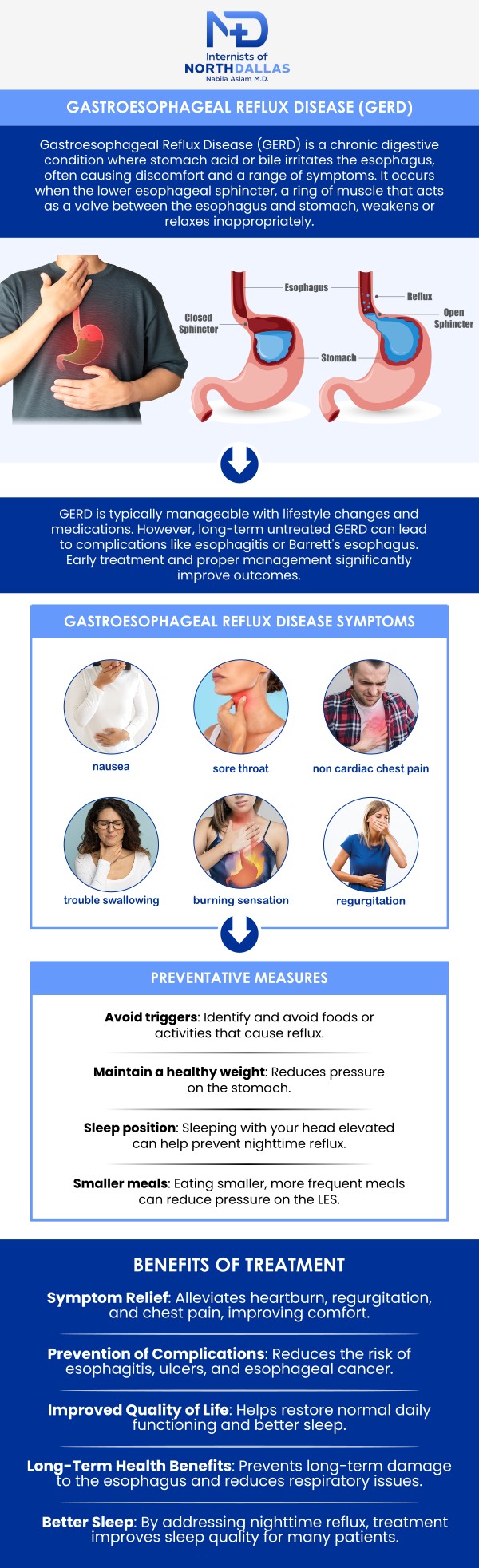
Table of Contents:
How is GERD diagnosed?
What causes GERD?
Can GERD lead to serious complications?
How can I prevent GERD flare-ups?
Take the First Step Toward GERD Relief with Dr. Nabila Aslam, M.D. in Irving, TX
At Internists of North Dallas, our experienced team specializes in the diagnosis and management of gastroesophageal reflux disease (GERD). We understand that GERD can greatly affect your daily life, and our goal is to offer a comprehensive, individualized approach to diagnosis and treatment. When you visit our clinic, we start with a thorough discussion of your symptoms, including heartburn, regurgitation, chest discomfort, or other related concerns. We will also ask about the frequency, severity, and potential triggers of your symptoms and how they impact your daily routine.
Initially, we may recommend lifestyle modifications, along with a trial of acid-suppressing medications. If you experience relief from these measures, it often indicates GERD. However, if your symptoms persist or you experience warning signs like difficulty swallowing, unexplained weight loss, or bleeding, we may suggest further testing to rule out other potential conditions. This helps ensure that you receive an accurate diagnosis and appropriate care.
At Internists of North Dallas, we tailor our diagnostic and treatment plans based on your unique needs. Our priority is to help you manage GERD effectively and improve your long-term health and well-being.
At Internists of North Dallas, our experienced physicians frequently help patients manage gastroesophageal reflux disease (GERD)—a common condition that occurs when stomach acid repeatedly flows back into the esophagus, the tube connecting your mouth and stomach. Here are the common causes of GERD (Gastroesophageal Reflux Disease):
• Weak Lower Esophageal Sphincter (LES): The LES is a muscle that acts as a valve between the stomach and esophagus. If it weakens or relaxes inappropriately, stomach acid can flow back into the esophagus, leading to GERD.
• Hiatal Hernia: A hiatal hernia occurs when a portion of the stomach pushes through the diaphragm into the chest cavity. This can impair the LES’s ability to function properly, increasing the risk of acid reflux.
• Obesity: Excess weight, particularly abdominal fat, can put pressure on the stomach, forcing stomach acid up into the esophagus and causing GERD symptoms.
• Pregnancy: Hormonal changes during pregnancy can relax the LES, and the growing uterus can put pressure on the stomach, both of which can contribute to GERD.
• Dietary Habits: Certain foods and beverages, including spicy foods, citrus, tomatoes, chocolate, alcohol, and caffeine, can trigger acid reflux by relaxing the LES or increasing stomach acid production.
• Overeating or Large Meals: Eating large portions can increase the volume of stomach contents, leading to higher pressure and acid reflux. This is particularly true if you eat right before lying down.
• Smoking: Smoking weakens the LES and increases stomach acid production, making it a major risk factor for GERD.
• Delayed Stomach Emptying: If food takes longer to leave the stomach, it can increase pressure within the stomach, contributing to acid reflux.
• Certain Medications: Some medications, including antihistamines, painkillers, antidepressants, and blood pressure medications, can relax the LES or irritate the esophagus, increasing the risk of GERD.
• Stress: High levels of stress can increase stomach acid production and make GERD symptoms worse. Stress may also lead to behaviors, like overeating or unhealthy food choices, that exacerbate acid reflux.
• Genetics: A family history of GERD may increase the likelihood of developing the condition, suggesting a genetic predisposition.
By understanding the causes, you can take proactive steps to manage and reduce the risk of GERD. Dr. Nabila Aslam, M.D., at Internists of North Dallas in Irving, TX, is here to help with personalized treatment options tailored to your unique needs. With over 20 years of experience, Dr. Aslam can guide you in managing and preventing GERD effectively.
At Internists of North Dallas, we frequently diagnose and manage gastroesophageal reflux disease (GERD), a persistent disorder that causes discomfort and irritation when stomach acid refluxes into the esophagus. While many patients in the North Dallas area experience mild to moderate GERD symptoms that can often be managed with lifestyle changes and medication, it’s important to understand that untreated or poorly controlled GERD can sometimes lead to more serious health complications.
Common Complications of GERD:
• Esophagitis: Chronic acid exposure can inflame the lining of the esophagus, leading to pain and discomfort.
• Esophageal Stricture: Scar tissue from repeated irritation can cause the esophagus to narrow, making swallowing difficult and requiring specialized care.
• Barrett’s Esophagus: Long-term GERD can cause changes in the esophageal lining, which slightly increases the risk of esophageal cancer. Regular monitoring is critical for those at risk.
• Respiratory Issues: GERD can sometimes contribute to chronic cough, asthma, or even pneumonia if stomach contents are aspirated into the lungs.
• Ulcers and Bleeding: Ongoing irritation may result in ulcers, leading to pain, bleeding, or anemia.
If you’re experiencing frequent heartburn, regurgitation, chronic cough, or difficulty swallowing, our board-certified internists at Internists of North Dallas can help. We offer comprehensive evaluation and tailored treatment plans to help you manage GERD and prevent these complications—improving your quality of life and long-term health.
At Internists of North Dallas, we understand how challenging gastroesophageal reflux disease (GERD) can be for our patients. Preventing GERD flare-ups often requires a combination of lifestyle adjustments, dietary changes, and careful management of triggers.
Here are some effective ways to prevent GERD flare-ups:
• Eat Smaller, More Frequent Meals
Large meals can increase stomach pressure, leading to acid reflux. Opt for smaller meals throughout the day to reduce the risk of flare-ups.
• Avoid Trigger Foods
Common triggers include spicy foods, citrus, tomatoes, chocolate, garlic, onions, coffee, and alcohol. Keep track of your specific triggers and limit or avoid them.
• Stay Upright After Eating
Avoid lying down or going to bed immediately after meals. To stop acid from returning to the esophagus, remain upright for at least two to three hours.
• Elevate the Head of Your Bed
Raising the head of your bed by 6-8 inches can help reduce acid reflux while sleeping by preventing stomach acid from rising into the esophagus.
• Maintain a Healthy Weight
Excess weight, especially around the abdomen, can put pressure on the stomach, increasing the likelihood of acid reflux. A healthy weight can help reduce this pressure.
• Quit Smoking
Smoking weakens the lower esophageal sphincter (LES), allowing stomach acid to escape into the esophagus. Quitting smoking can help improve GERD symptoms.
• Limit Caffeine and Alcohol
Both caffeine and alcohol can relax the LES and increase the risk of acid reflux. Reducing or eliminating them can help manage GERD symptoms.
• Wear Loose-Fitting Clothing
Tight clothes, especially around the waist, can put additional pressure on the stomach and worsen GERD. Opt for loose-fitting clothing to reduce this risk.
• Avoid Late-Night Snacking
Eating too close to bedtime can increase the likelihood of reflux while you sleep. Try to finish eating at least 2-3 hours before going to bed.
• Manage Stress
Stress can trigger or worsen GERD symptoms. To effectively manage stress, engage in relaxation practices like yoga, meditation, or deep breathing.
• Take Medications as Prescribed
If you’ve been prescribed medications, follow your doctor’s instructions to help control acid production and prevent flare-ups.
By following these preventive measures, you can significantly reduce the risk of GERD flare-ups and improve your overall digestive health. If you’re struggling to manage GERD symptoms or need personalized advice, Dr. Nabila Aslam, M.D., at Internists of North Dallas is here to help. We provide comprehensive care tailored to your needs, ensuring that you receive the best treatment and guidance for managing GERD.
If you’re struggling with GERD (gastroesophageal reflux disease), finding the right doctor to manage and treat your symptoms is crucial for long-term relief. Dr. Nabila Aslam, M.D., a board-certified internist with over 20 years of experience, offers expert care for GERD sufferers at Internists of North Dallas in Irving, TX. With her extensive background in internal medicine, Dr. Aslam provides personalized treatment plans tailored to each patient’s needs, whether it’s through lifestyle changes, dietary adjustments, or medication management. She works closely with each patient to ensure the best approach to managing GERD and preventing further complications.
Dr. Aslam’s patient-centered approach means you’ll receive compassionate care every step of the way. By addressing the root causes of GERD and offering effective solutions, she helps patients experience significant improvements in their digestive health. With over 20 years of experience in treating a wide range of conditions, Dr. Aslam is well-equipped to provide lasting relief. If you’re ready to take the first step toward better health, Dr. Aslam’s expertise in GERD treatment can guide you toward comfort and wellness. Schedule a consultation today to begin your journey toward lasting relief.
For more information, contact us or schedule an appointment online. We are conveniently located at 4500 N MacArthur Blvd #130, Irving, TX 75038. We serve patients from Irving TX, Coppell TX, Euless TX, Las Colinas TX, Farmers Branch TX, Valley Ranch TX, and surrounding areas.

Check Out Our 5 Star Reviews


Additional Services You May Need
Additional Services You May Need
▸ Primary Care
▸ Internal Medicine
▸ Geriatrics
▸ Diabetes
▸ Physical Exam
▸ Vaccinations
▸ Chest Pain
▸ Chronic Care Management
▸ Hypertension
▸ Common Cold
▸ Arthritis
▸ Allergies
▸ Acute Care
▸ Women’s Health
▸ Wellness
▸ Annual Physical
▸ Sickness Visits
▸ Anxiety and Depression
▸ Congestive Heart Failure
▸ COPD
▸ Gerd
▸ Hypothyroidism
▸ Alzheimer’s disease
▸ Dementia
▸ Acid Reflux
 4500 N MacArthur Blvd #130, Irving, TX 75038
 Call Now
 Monday - Friday: 8:00 AM - 5:00 PM


 Send Text
 How May I Help You?