


When Should I See a Doctor for Acid Reflux Pain?
If you experience frequent or severe acid reflux pain, it may be time to consult with a healthcare provider. Symptoms such as persistent heartburn, regurgitation, chest pain, or difficulty swallowing, especially when they interfere with daily activities or occur more than twice a week, should be evaluated by a doctor. At Internists of North Dallas, Dr. Nabila Aslam, MD, is dedicated to diagnosing and managing acid reflux effectively. We work closely with patients to assess their symptoms, recommend treatment options, and help prevent long-term complications. For more information, contact us or schedule an appointment online. We are conveniently located at 4500 N MacArthur Blvd #130, Irving, TX 75038.
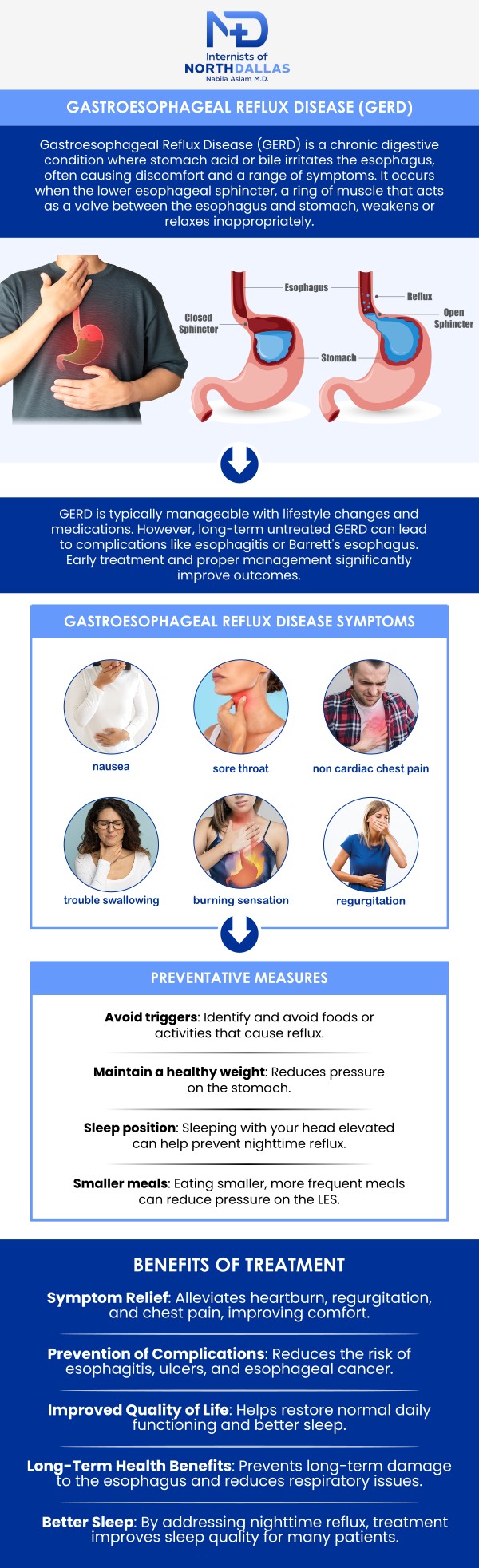
Table of Contents:
What causes acid reflux pain?
What are the common symptoms of acid reflux pain?
Can acid reflux pain be mistaken for a heart attack?
What triggers acid reflux pain?
Understanding the Causes of Acid Reflux Pain and Treatment Options with Dr. Nabila Aslam, MD
At Internists of North Dallas, we often see patients experiencing acid reflux pain—commonly known as heartburn. Acid reflux pain occurs when stomach acid flows back into the esophagus, causing irritation and discomfort. Several factors can contribute to this painful condition, including:
• Weak Lower Esophageal Sphincter (LES): The LES is a muscle that prevents stomach acid from flowing back into the esophagus. If the LES is weak or relaxed, acid can escape into the esophagus, causing pain.
• Overeating or Large Meals: Eating large portions can put pressure on the stomach, increasing the likelihood of acid reflux and causing discomfort in the chest or throat.
• Spicy or Fatty Foods: Foods high in fat or spices can irritate the stomach lining, making acid reflux more likely and intensifying the pain.
• Caffeine and Alcohol: These beverages can relax the LES, allowing stomach acid to flow into the esophagus, leading to heartburn and discomfort.
• Hiatal Hernia: A condition where part of the stomach pushes up through the diaphragm into the chest, which can make it easier for acid to reflux into the esophagus.
• Obesity: Excess weight can put additional pressure on the stomach, pushing acid upward into the esophagus and causing pain.
• Pregnancy: Hormonal changes and the physical pressure from the growing baby can lead to acid reflux and pain.
• Smoking: Smoking can weaken the LES and decrease saliva production, which helps neutralize stomach acid, making acid reflux more likely.
• Certain Medications: Some medications, such as pain relievers (NSAIDs), blood pressure medications, and certain antidepressants, can contribute to acid reflux by relaxing the LES or irritating the stomach lining.
Identifying and managing these triggers can help alleviate acid reflux pain and reduce its frequency. If you are experiencing frequent acid reflux or heartburn, our experienced internists can help. At Internists of North Dallas, we offer personalized evaluations and treatments tailored to your needs. Our goal is to not only relieve your discomfort but also address the underlying factors, help you make effective lifestyle changes, and, when necessary, recommend appropriate medications.
At Internists of North Dallas, we frequently see patients experiencing symptoms of acid reflux, also known as gastroesophageal reflux disease (GERD). Acid reflux pain can cause a variety of uncomfortable symptoms that affect daily life. The most common symptoms include:
• Heartburn: A burning sensation in the chest or throat, often after eating or when lying down.
• Regurgitation: The sensation of stomach acid or food coming back up into the throat or mouth.
• Chest pain: Discomfort or a sharp pain in the chest, sometimes mimicking heart issues.
• Difficulty swallowing (dysphagia): A feeling that food is stuck in the throat or chest.
• Sore throat or hoarseness: Irritation caused by stomach acid affecting the throat.
• Chronic cough: A persistent cough, especially at night, that doesn’t seem to go away.
• Bad breath (halitosis): An unpleasant odor from the mouth due to acid reflux.
• Nausea: A general feeling of discomfort or queasiness, often after eating.
• Bloating: A feeling of fullness or heaviness in the stomach after meals.
If you are experiencing these symptoms frequently or if they become severe, the team at Internists of North Dallas is here to help. Our experienced physicians can provide a thorough evaluation, accurate diagnosis, and a personalized treatment plan to effectively manage your symptoms and improve your quality of life.
At Internists of North Dallas, our physicians often see patients who are concerned about chest pain, unsure whether it is caused by acid reflux (GERD) or something more serious like a heart attack. It’s important to know that the symptoms of these two conditions can overlap, making it difficult to tell them apart without a professional evaluation.
Acid reflux, or gastroesophageal reflux disease (GERD), commonly causes a burning sensation or discomfort in the chest, often known as heartburn. This pain may radiate from the chest to the neck, throat, or jaw, and can be accompanied by a sour taste or regurgitation of food or liquid.
A heart attack, however, usually presents with different characteristics. The pain is often described as pressure, tightness, or a squeezing sensation in the chest, which may spread to the arms, back, neck, or jaw. Heart attacks are frequently associated with additional symptoms such as shortness of breath, cold sweats, nausea, or lightheadedness. Unlike heartburn, heart attack pain can occur at any time and is not typically relieved by antacids. Because the symptoms can be so similar, it’s critical not to ignore chest pain or try to self-diagnose.
If you experience sudden or severe chest pain, pain that radiates to other parts of your body, difficulty breathing, or symptoms like sweating, nausea, or dizziness, seek emergency medical care immediately. At Internists of North Dallas, our team is dedicated to providing thorough evaluations and prompt care to help distinguish between acid reflux and more serious conditions like heart attacks.
At Internists of North Dallas, we often see patients struggling with acid reflux pain, commonly known as heartburn. This discomfort occurs when stomach acid flows back into the esophagus, irritating its lining. Understanding what triggers acid reflux is the first step toward relief. Acid reflux pain can be triggered by a variety of factors, often related to lifestyle, diet, or certain habits. Common triggers include:
• Overeating: Eating large meals can put pressure on the stomach, increasing the likelihood of acid reflux and causing discomfort.
• Spicy Foods: Spicy or heavily seasoned foods can irritate the stomach lining, making acid reflux more likely and intensifying the pain.
• Fatty Foods: High-fat foods can slow down digestion, causing the stomach to produce more acid and triggering reflux.
• Caffeine: Caffeinated beverages, such as coffee, tea, and soda, can relax the lower esophageal sphincter (LES), allowing acid to flow back into the esophagus.
• Alcohol: Alcohol can relax the LES and irritate the stomach lining, contributing to acid reflux.
• Chocolate: Chocolate contains caffeine and other substances that can relax the LES and promote acid reflux.
• Citrus Fruits: Oranges, lemons, and other citrus fruits are acidic and can irritate the esophagus, triggering acid reflux pain.
• Tomato-based Foods: Foods like pizza, pasta sauce, and salsa made with tomatoes can be acidic and cause discomfort in people with acid reflux.
• Carbonated Drinks: Sodas and sparkling water can cause bloating and increased pressure on the stomach, leading to acid reflux.
• Lying Down After Eating: Lying flat too soon after eating can cause acid to flow back into the esophagus due to gravity.
• Stress: High levels of stress can increase stomach acid production, leading to acid reflux and discomfort.
• Smoking: Smoking weakens the LES, making it easier for stomach acid to escape into the esophagus and cause pain.
• Tight Clothing: Wearing tight-fitting clothes around the abdomen can increase pressure on the stomach, leading to acid reflux.
Being mindful of these triggers can help reduce the occurrence of acid reflux and its associated pain. At Internists of North Dallas, we understand how disruptive acid reflux can be to your daily life. Our team will work with you to identify your unique triggers and develop a personalized management plan. Simple lifestyle changes—like modifying your diet, eating smaller meals, and adjusting medication when possible—can make a big difference.
Acid reflux pain occurs when stomach acid flows back into the esophagus, causing irritation and discomfort. The most common causes include a weakened lower esophageal sphincter (LES), overeating, and the consumption of trigger foods like spicy, fatty, or acidic items. Other factors like stress, smoking, or certain medications can also exacerbate acid reflux symptoms. Dr. Nabila Aslam, MD, at Internists of North Dallas, offers a comprehensive approach to diagnosing and treating acid reflux, addressing both the symptoms and underlying causes to provide long-term relief.
Dr. Aslam works closely with patients to create personalized treatment plans that may include dietary modifications, lifestyle changes, and, when necessary, medications to control stomach acid production. She emphasizes the importance of regular follow-up care to monitor progress and adjust treatments as needed. By understanding the causes of acid reflux pain and offering effective management strategies, Dr. Nabila Aslam ensures that patients can achieve a better quality of life while minimizing discomfort from acid reflux.
For more information, contact us or schedule an appointment online. We are conveniently located at 4500 N MacArthur Blvd #130, Irving, TX 75038. We serve patients from Irving TX, Coppell TX, Euless TX, Las Colinas TX, Farmers Branch TX, Valley Ranch TX, and surrounding areas.

Check Out Our 5 Star Reviews


Additional Services You May Need
Additional Services You May Need
▸ Primary Care
▸ Internal Medicine
▸ Geriatrics
▸ Diabetes
▸ Physical Exam
▸ Vaccinations
▸ Chest Pain
▸ Chronic Care Management
▸ Hypertension
▸ Common Cold
▸ Arthritis
▸ Allergies
▸ Acute Care
▸ Women’s Health
▸ Wellness
▸ Annual Physical
▸ Sickness Visits
▸ Anxiety and Depression
▸ Congestive Heart Failure
▸ COPD
▸ Gerd
▸ Hypothyroidism
▸ Alzheimer’s disease
▸ Dementia
▸ Acid Reflux
 4500 N MacArthur Blvd #130, Irving, TX 75038
 Call Now
 Monday - Friday: 8:00 AM - 5:00 PM


 Send Text
 How May I Help You?