


FAQs About Alzheimer’s Disease
At Internists of North Dallas, we provide essential information to help you understand Alzheimer’s disease, its symptoms, progression, and available treatment options. Our FAQs cover topics such as how Alzheimer’s affects the brain, common signs and symptoms, and the importance of early diagnosis. Whether you’re seeking help for yourself or a loved one, Dr. Nabila Aslam, MD, and our dedicated team are here to guide you through understanding and managing Alzheimer’s disease. For more information, contact us or schedule an appointment online. We are conveniently located at 4500 N MacArthur Blvd #130, Irving, TX 75038.
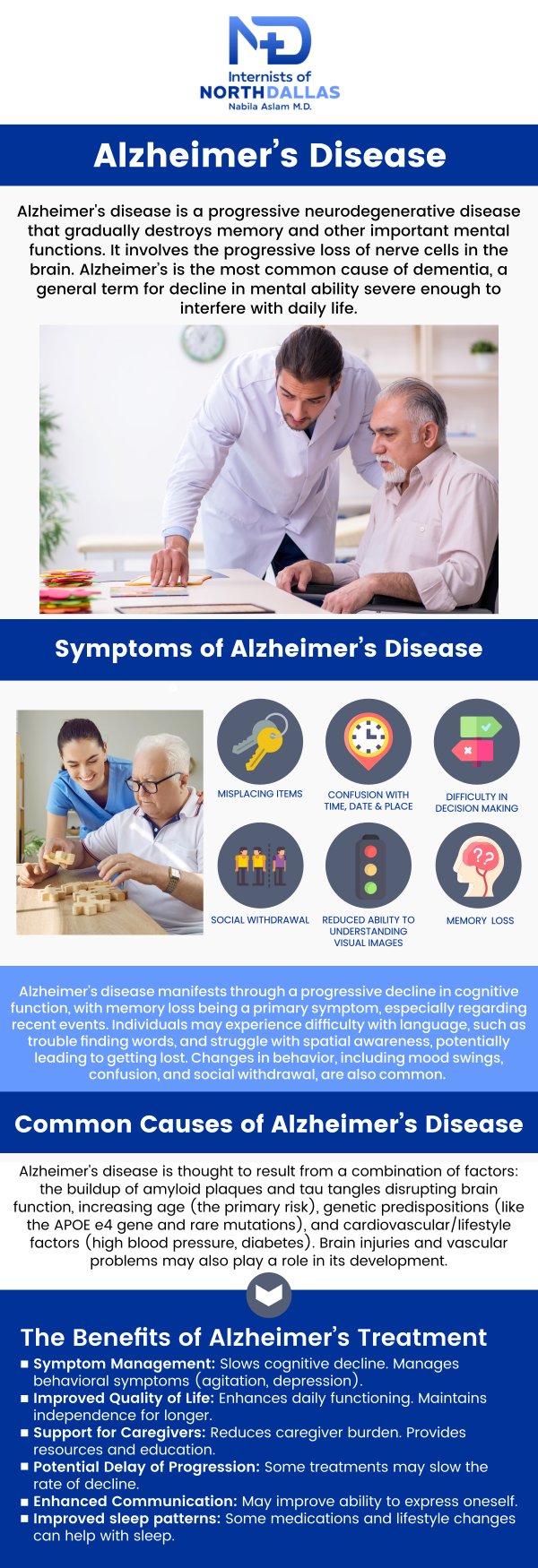
Table of Contents:
How is Alzheimer’s disease diagnosed?
What are the risk factors for developing Alzheimer’s disease?
How does Alzheimer’s disease affect the brain?
How do symptoms of Alzheimer’s disease progress over time?
What is the difference between normal aging and Alzheimer’s disease?
Can Alzheimer’s disease cause mood swings or personality changes?
How does memory loss manifest in Alzheimer’s disease?
Can Alzheimer’s disease be diagnosed in the early stages?
Can Alzheimer’s disease be cured?
How can I manage daily tasks if I have Alzheimer’s disease?
What lifestyle changes can help manage Alzheimer’s disease?
How important is exercise for someone with Alzheimer’s disease?
Can a healthy diet slow down the progression of Alzheimer’s disease?
How can I support someone with Alzheimer’s disease?
How does Alzheimer’s disease impact a person’s quality of life?
Can people with Alzheimer’s disease still live independently?
How can I prepare for the future if I or a loved one is diagnosed with Alzheimer’s disease?
Alzheimer’s disease is diagnosed through a combination of medical history review, cognitive tests, and brain imaging to rule out other conditions. A comprehensive assessment by a healthcare provider, including memory and problem-solving evaluations, is crucial. At Internists of North Dallas, Dr. Nabila Aslam, MD, and her team ensure accurate diagnosis and early intervention for patients showing symptoms of Alzheimer’s.
Risk factors for Alzheimer’s include age, genetics, family history, and lifestyle factors such as poor diet, lack of exercise, and smoking. Having a history of head trauma or cardiovascular issues can also increase risk. At Internists of North Dallas, Dr. Nabila Aslam, MD, and her team work to identify these risk factors and provide personalized care to reduce risks.
Alzheimer’s disease leads to the buildup of amyloid plaques and tau tangles in the brain, disrupting communication between brain cells. Over time, this damage leads to a decline in memory, thinking, and behavior. Dr. Nabila Aslam, MD, at Internists of North Dallas, works with patients to monitor brain health and recommend interventions that can slow disease progression.
In the early stages, memory loss and confusion are common, but as Alzheimer’s progresses, individuals may have difficulty recognizing loved ones, communicating, and managing daily tasks. The disease eventually impairs the ability to perform basic functions. At Internists of North Dallas, Dr. Nabila Aslam, MD, provides ongoing support and strategies to manage symptoms as they evolve.
Normal aging can involve mild forgetfulness, but Alzheimer’s disease causes more significant memory loss, confusion, and difficulty with tasks that interfere with daily life. It is marked by a progressive decline in cognitive function. Dr. Nabila Aslam, MD, at Internists of North Dallas, assesses cognitive health to distinguish between aging and Alzheimer’s-related changes.
Yes, individuals with Alzheimer’s may experience mood swings, depression, or personality changes, such as becoming more withdrawn, anxious, or aggressive. These changes can be distressing for both the person and their loved ones. At Internists of North Dallas, Dr. Nabila Aslam, MD, offers support and resources to manage emotional changes associated with Alzheimer’s disease.
Memory loss in Alzheimer’s often starts with forgetting recent events or conversations. Over time, it can progress to forgetting names, places, and appointments, and in advanced stages, the person may forget basic facts about themselves. At Internists of North Dallas, Dr. Nabila Aslam, MD, assists with early detection and strategies to cope with memory loss.
Yes, Alzheimer’s can be diagnosed in its early stages, often through neuropsychological testing, brain scans, and an evaluation of symptoms. Early diagnosis allows for early intervention, which can help manage symptoms and improve quality of life. Dr. Nabila Aslam, MD, at Internists of North Dallas, emphasizes the importance of early detection and treatment.
Currently, there is no cure for Alzheimer’s disease, but treatments can help manage symptoms and improve quality of life. Medications may help with memory loss and slow the progression in some cases. Dr. Nabila Aslam, MD, at Internists of North Dallas, offers treatments and support to help manage the disease and its effects on daily life.
Managing daily tasks with Alzheimer’s disease may involve using memory aids, establishing routines, and simplifying tasks. Support from caregivers and loved ones is crucial. Dr. Nabila Aslam, MD, at Internists of North Dallas, works with patients and their families to create strategies that make daily tasks more manageable.
Lifestyle changes such as staying mentally active, engaging in physical exercise, maintaining a healthy diet, and getting enough sleep can support cognitive health. At Internists of North Dallas, Dr. Nabila Aslam, MD, guides patients in adopting these habits to help manage Alzheimer’s and improve overall well-being.
Exercise is crucial for people with Alzheimer’s as it helps maintain physical health, reduce anxiety, and improve cognitive function. Regular physical activity can also improve mood and sleep quality. Dr. Nabila Aslam, MD, at Internists of North Dallas, recommends personalized exercise plans to support both mental and physical health.
A healthy diet, particularly one rich in antioxidants, healthy fats, and vitamins, may help protect brain health and slow Alzheimer’s progression. The Mediterranean diet, for example, is often recommended. Dr. Nabila Aslam, MD, at Internists of North Dallas, works with patients to develop diet plans that support cognitive function and overall health.
Supporting someone with Alzheimer’s involves patience, understanding, and creating a calm, structured environment. Offering reminders, assisting with daily tasks, and providing emotional support can be invaluable. At Internists of North Dallas, Dr. Nabila Aslam, MD, provides resources and training for caregivers to help them support their loved ones effectively.
Alzheimer’s disease significantly impacts a person’s quality of life by affecting memory, independence, and daily functioning. As the disease progresses, individuals may need assistance with basic activities like eating, dressing, and bathing. Dr. Nabila Aslam, MD, at Internists of North Dallas, works to improve quality of life by offering treatment options and support for both patients and caregivers.
In the early stages of Alzheimer’s, some individuals may still be able to live independently, though they may require some assistance. As the disease progresses, most people will need help with daily activities. Dr. Nabila Aslam, MD, at Internists of North Dallas, provides guidance on when and how to consider additional care options.
Preparing for the future involves understanding the progression of Alzheimer’s, creating legal and financial plans, and establishing a support network. Early planning can ease the burden as symptoms progress. Dr. Nabila Aslam, MD, at Internists of North Dallas, helps patients and families navigate these important decisions for the future.
For more information, contact us or schedule an appointment online. We are conveniently located at 4500 N MacArthur Blvd #130, Irving, TX 75038. We serve patients from Irving TX, Coppell TX, Euless TX, Las Colinas TX, Farmers Branch TX, Valley Ranch TX, and surrounding areas.

Check Out Our 5 Star Reviews


Additional Services You May Need
Additional Services You May Need
▸ Primary Care
▸ Internal Medicine
▸ Geriatrics
▸ Diabetes
▸ Physical Exam
▸ Vaccinations
▸ Chest Pain
▸ Chronic Care Management
▸ Hypertension
▸ Common Cold
▸ Arthritis
▸ Allergies
▸ Acute Care
▸ Women’s Health
▸ Wellness
▸ Annual Physical
▸ Sickness Visits
▸ Anxiety and Depression
▸ Congestive Heart Failure
▸ COPD
▸ Gerd
▸ Hypothyroidism
▸ Alzheimer’s disease
▸ Dementia
▸ Acid Reflux
 4500 N MacArthur Blvd #130, Irving, TX 75038
 Call Now
 Monday - Friday: 8:00 AM - 5:00 PM


 Send Text
 How May I Help You?