


Where to Get Comprehensive Bipolar Disorder Treatment in Irving, TX?
Finding comprehensive bipolar disorder treatment in Irving, TX, is crucial for managing this condition effectively. At Internists of North Dallas, Dr. Nabila Aslam, M.D., offers compassionate care and personalized treatment plans for individuals living with bipolar disorder. Through a combination of medication management, therapy, and lifestyle guidance, Dr. Aslam helps patients achieve better emotional stability and overall well-being. For more information, contact us or schedule an appointment online. We are conveniently located at 4500 N MacArthur Blvd #130, Irving, TX 75038.
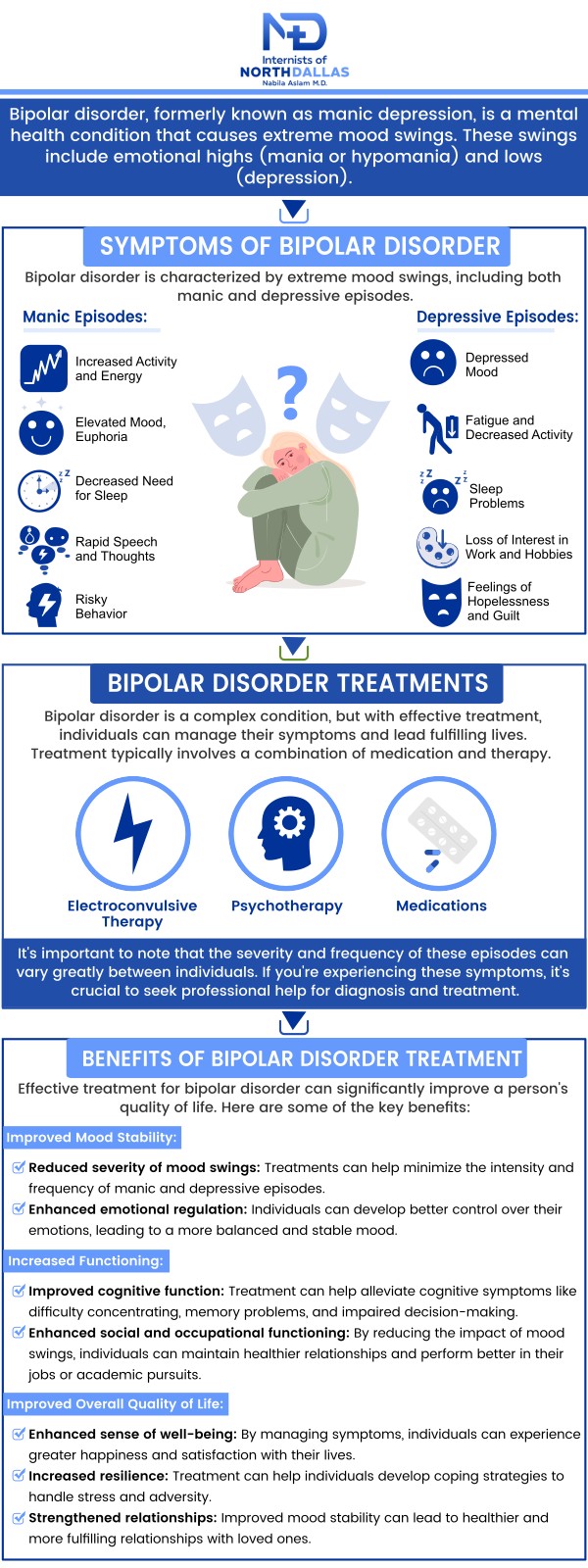
Table of Contents:
What causes bipolar disorder?
What are the symptoms of bipolar disorder?
What triggers bipolar episodes?
How to deal with someone who is bipolar?
Managing Bipolar Disorder with Compassionate Care from Dr. Nabila Aslam, M.D.
At Internists of North Dallas, we strive to provide comprehensive care for our patients, including support for mental health conditions such as bipolar disorder. Here are the common causes of bipolar disorder:
• Genetic Factors
Genetic predisposition plays a significant role in bipolar disorder. If a close relative has the condition, the likelihood of developing it increases.
• Chemical Imbalance in the Brain
Imbalances in neurotransmitters, such as serotonin, dopamine, and norepinephrine, are believed to contribute to mood swings in bipolar disorder.
• Abnormal Brain Structure and Function
Research suggests that people with bipolar disorder may have structural changes in the brain or differences in how certain brain regions function, affecting mood regulation.
• Environmental Stress
Stressful life events, such as trauma, abuse, or major life changes, can trigger the onset of bipolar disorder or exacerbate symptoms. Chronic stress can also increase the frequency of episodes.
• Sleep Disruptions
Irregular sleep patterns, including insomnia or disrupted sleep schedules, can trigger mood episodes in individuals with bipolar disorder.
• Hormonal Changes
Hormonal fluctuations during puberty, pregnancy, or menopause can increase the risk of developing bipolar disorder or intensify existing symptoms.
• Substance Abuse
The use of alcohol or drugs, especially during adolescence or young adulthood, can contribute to the onset or worsening of bipolar disorder.
• Brain Injury
Severe head injuries or trauma to the brain may sometimes lead to the development of mood disorders, including bipolar disorder.
• Biological Factors
Impaired brain circuitry involved in regulating mood, thought, and behavior may contribute to the onset of bipolar disorder.
• Inherited Traits
While a specific gene has not been identified, research suggests certain inherited genetic traits can increase susceptibility to bipolar disorder.
At Internists of North Dallas, we recognize the complex interplay of these genetic, biological, and environmental influences. We are here to help you understand your risks and manage symptoms effectively with a personalized, compassionate approach.
At Internists of North Dallas, we understand that mental health is a vital part of your overall well-being. Bipolar disorder is a complex condition marked by significant shifts in mood, energy, and activity levels. Here are the common symptoms of bipolar disorder:
Manic Episode Symptoms:
• Elevated or Irritable Mood: Feeling overly happy, euphoric, or unusually irritable.
• Increased Energy and Activity: A surge in energy and activity, often leading to restlessness.
• Racing Thoughts: Rapid thinking, jumping from one idea to another, making it difficult to focus.
• Decreased Need for Sleep: Feeling energized despite getting little sleep (e.g., sleeping only a few hours without feeling tired).
• Impulsive or Risky Behavior: Engaging in impulsive behaviors such as excessive spending, risky sexual activity, or reckless driving.
• Increased Talkativeness: Speaking quickly, often without stopping, and feeling pressure to keep talking.
• Grandiosity: Unrealistic sense of self-importance, believing one has special abilities or talents.
Depressive Episode Symptoms:
• Persistent Sadness or Hopelessness: Feeling deeply sad, empty, or hopeless, often with little to no relief.
• Loss of Interest in Activities: Losing interest or pleasure in hobbies, activities, or relationships that were once enjoyable.
• Fatigue or Low Energy: Feeling constantly tired or lacking the energy to perform daily tasks.
• Sleep Disturbances: Sleeping too much or experiencing insomnia (difficulty sleeping).
• Difficulty Concentrating: Struggling to focus, make decisions, or remember things.
• Feelings of Worthlessness or Guilt: Experiencing excessive guilt or feeling worthless, often for no clear reason.
• Changes in Appetite: Significant weight gain or loss due to overeating or loss of appetite.
• Thoughts of Death or Suicide: Having thoughts of death or suicide, or making suicidal attempts.
Mixed Episode Symptoms:
• Symptoms of Both Mania and Depression: Experiencing both manic and depressive symptoms simultaneously, such as feeling extremely sad while also feeling overly energetic or irritable.
• Rapid Mood Swings: Quick shifts in mood, from extreme euphoria to sadness or anger.
Other Symptoms:
• Mood Instability: Sudden and extreme shifts in mood that may last for days or weeks.
• Changes in Behavior or Personality: Noticeable shifts in behavior or personality, such as becoming unusually outgoing or withdrawn.
• Difficulty Maintaining Relationships: Strained relationships due to unpredictable mood swings and erratic behavior.
Recognizing these symptoms early on is crucial for seeking treatment and managing bipolar disorder effectively. As internists, we are often the first point of contact for individuals experiencing changes in mood or behavior. If you or a loved one is noticing these symptoms, the team at Internists of North Dallas is here to help. We can provide a thorough evaluation, guidance on next steps, and coordinate care with mental health specialists if needed.
At Internists of North Dallas, we understand that managing bipolar disorder requires a comprehensive, individualized approach. Bipolar episodes—which include periods of depression and mania or hypomania—can be triggered by a variety of factors. Here are common triggers of bipolar episodes:
• Stressful Life Events
Major life changes such as moving, a job loss, the death of a loved one, or a relationship breakup can trigger mood swings or episodes of mania or depression.
• Sleep Disruptions
Lack of sleep or irregular sleep patterns can trigger both manic and depressive episodes. People with bipolar disorder often experience heightened sensitivity to changes in their sleep routine.
• Substance Abuse
Alcohol, recreational drugs, or certain medications can exacerbate symptoms of bipolar disorder, triggering both manic and depressive episodes.
• Medication Non-Compliance
Skipping or stopping prescribed medications, particularly mood stabilizers or antipsychotics, can lead to a relapse of bipolar symptoms and trigger episodes.
• Seasonal Changes
Changes in the seasons, particularly the transition into winter or summer, can trigger depressive or manic episodes. This is sometimes referred to as seasonal affective disorder (SAD).
• Hormonal Changes
Hormonal fluctuations related to puberty, pregnancy, or menopause can trigger episodes, particularly in women.
• Physical Illness or Injury
Serious illnesses, surgeries, or physical injury can trigger stress or disrupt routine, leading to mood swings or a new episode of mania or depression.
• Emotional or Physical Exhaustion
Being emotionally or physically drained, whether from work, personal life, or health challenges, can make a person more vulnerable to bipolar episodes.
• Stimulant Use
The use of stimulants such as caffeine, nicotine, or certain medications can trigger manic episodes due to their stimulating effects on the brain.
• Social Isolation or Lack of Support
Feelings of loneliness or isolation can trigger depressive episodes, especially if the individual lacks a support system to help them manage their emotions.
• Financial or Work-Related Stress
High levels of stress related to finances, career, or job-related pressure can lead to mood instability and increase the risk of episodes.
• Overstimulation
Intense social or sensory stimulation—such as large crowds, bright lights, or loud noises—can overwhelm individuals and trigger a manic or depressive episode.
Understanding these triggers can help individuals and their families better manage bipolar disorder and prevent or minimize the occurrence of episodes. At Internists of North Dallas, our experienced team takes the time to help you identify your personal triggers and develop a plan tailored to your needs. If you or a loved one is experiencing symptoms of bipolar disorder, we are here to help you navigate your care, manage episodes, and support your long-term wellness.
At Internists of North Dallas, we understand that supporting someone with bipolar disorder can be both rewarding and challenging. As your trusted healthcare partners, we want to help you understand this condition and offer practical ways you can provide meaningful support. Bipolar disorder is characterized by extreme mood swings, including episodes of mania, marked by elevated moods and increased energy, and depression, which can bring about feelings of sadness, hopelessness, and fatigue. These mood fluctuations are more intense than typical mood swings, often affecting daily functioning and relationships.
One of the most effective ways to help is by educating yourself about bipolar disorder, its symptoms, and common triggers. Understanding how the condition works allows you to better recognize changes in your loved one’s behavior and provide informed support. At Internists of North Dallas, we offer valuable resources and information to help families and loved ones navigate the challenges of bipolar disorder. Our care team can help guide you in fostering these conversations and providing emotional support.
Supporting someone with bipolar disorder also means helping them adhere to their treatment plan, which may include medication, therapy, and healthy lifestyle practices. Consistent sleep, balanced meals, and regular physical activity are all important aspects of managing the condition. If your loved one shows signs of a crisis, such as self-harm or erratic behavior, it’s crucial to seek professional help immediately.
Dr. Nabila Aslam, M.D., a board-certified internist at Internists of North Dallas, offers compassionate, personalized care for individuals managing bipolar disorder. With over 20 years of experience, Dr. Aslam understands the complexities of this mental health condition and works closely with each patient to develop a tailored treatment plan. Her approach integrates medication management, therapy options, and lifestyle adjustments, focusing on the whole person to help individuals achieve stability and improve their quality of life.
At Internists of North Dallas, Dr. Aslam emphasizes open communication and support, creating a safe and understanding environment for patients with bipolar disorder. Whether you’re in the midst of a manic episode or struggling with depressive states, Dr. Aslam is committed to providing the care and resources necessary for managing symptoms effectively. With her expertise and dedication to your well-being, she ensures that every patient receives the most effective treatment to manage their bipolar disorder and lead a balanced life.
For more information, contact us or schedule an appointment online. We are conveniently located at 4500 N MacArthur Blvd #130, Irving, TX 75038. We serve patients from Irving TX, Coppell TX, Euless TX, Las Colinas TX, Farmers Branch TX, Valley Ranch TX, and surrounding areas.

Check Out Our 5 Star Reviews


Additional Services You May Need
Additional Services You May Need
▸ Primary Care
▸ Internal Medicine
▸ Geriatrics
▸ Diabetes
▸ Physical Exam
▸ Vaccinations
▸ Chest Pain
▸ Chronic Care Management
▸ Hypertension
▸ Common Cold
▸ Arthritis
▸ Allergies
▸ Acute Care
▸ Women’s Health
▸ Wellness
▸ Annual Physical
▸ Sickness Visits
▸ Anxiety and Depression
▸ Congestive Heart Failure
▸ COPD
▸ Gerd
▸ Hypothyroidism
▸ Alzheimer’s disease
▸ Dementia
▸ Acid Reflux
 4500 N MacArthur Blvd #130, Irving, TX 75038
 Call Now
 Monday - Friday: 8:00 AM - 5:00 PM


 Send Text
 How May I Help You?