


When Should You Seek Treatment for a GERD Flare-Up in Irving, TX?
GERD (gastroesophageal reflux disease) can cause uncomfortable symptoms like heartburn, regurgitation, and chest pain. If these symptoms become frequent or severe, it’s important to seek medical treatment. Dr. Nabila Aslam, M.D., at Internists of North Dallas can help you manage your GERD flare-ups through lifestyle changes, medication, and other targeted therapies to prevent further complications. For more information, contact us or schedule an appointment online. We are conveniently located at 4500 N MacArthur Blvd #130, Irving, TX 75038.
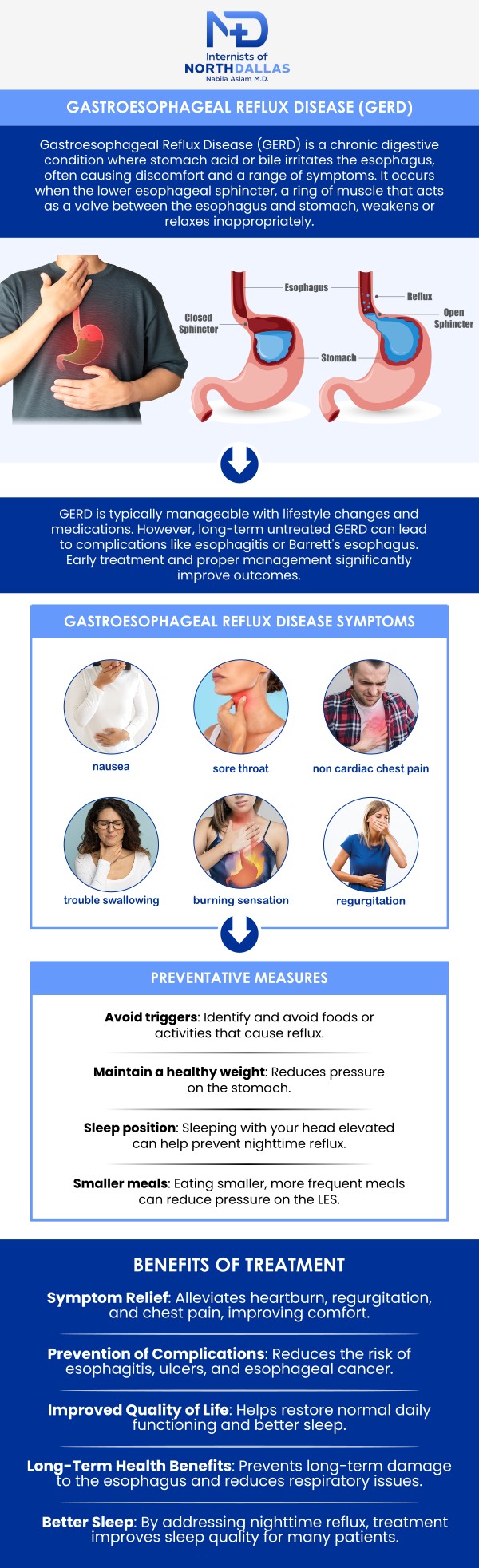
Table of Contents:
What can trigger a GERD flare-up?
How can GERD flare-ups be treated in Irving, TX?
When should I see a doctor for a GERD flare-up?
Can GERD flare-ups cause long-term damage if not treated?
How Dr. Nabila Aslam, M.D., Can Help Manage Your GERD Flare-Up in Irving, TX
At Internists of North Dallas, we frequently help patients manage gastroesophageal reflux disease (GERD), a condition characterized by troublesome acid reflux symptoms. Understanding common triggers can be a key step toward controlling flare-ups and improving your quality of life. Several factors can trigger a GERD flare-up, including:
• Certain Foods: Spicy, fatty, or acidic foods such as tomatoes, citrus fruits, chocolate, and fried foods.
• Large Meals: Eating large meals or overeating can increase pressure on the stomach, leading to acid reflux.
• Caffeine and Alcohol: Drinks like coffee, tea, soda, and alcohol can relax the lower esophageal sphincter, allowing acid to flow back into the esophagus.
• Carbonated Beverages: Soda and sparkling water can cause bloating and pressure in the stomach, triggering reflux.
• High-Fat Foods: Fried foods, cheese, and fatty cuts of meat can slow digestion and increase the risk of reflux.
• Chocolate and Mint: These can relax the lower esophageal sphincter, contributing to acid reflux.
• Citrus and Tomatoes: Their acidic nature can irritate the esophagus and worsen symptoms.
• Late-Night Eating: Eating too close to bedtime increases the likelihood of reflux while lying down.
• Stress: Emotional stress or anxiety can contribute to increased acid production and GERD symptoms.
• Obesity: Being overweight puts pressure on the stomach, which can trigger reflux and worsen GERD.
• Smoking: Smoking weakens the lower esophageal sphincter, making it easier for stomach acid to enter the esophagus.
• Certain Medications: Some medications, such as antihistamines, pain relievers, and blood pressure medications, can relax the esophageal sphincter and increase reflux.
Identifying and avoiding these triggers can help reduce the frequency and severity of GERD flare-ups. Dr. Nabila Aslam, M.D., at Internists of North Dallas can guide you in managing your triggers and developing a personalized treatment plan. Recognizing and managing your individual triggers is essential for reducing GERD symptoms. If you continue to experience heartburn or reflux despite lifestyle changes, the team is here to help. We offer comprehensive evaluation and personalized treatment plans to help you find relief and prevent complications.
GERD flare-ups can be effectively managed through a combination of key lifestyle modifications, which play a crucial role in reducing symptoms and preventing further discomfort. One of the most important changes is avoiding trigger foods such as spicy, fatty, or acidic foods that commonly worsen GERD symptoms. Additionally, eating smaller, more frequent meals rather than large meals can help reduce pressure on the stomach and minimize acid reflux.
Another helpful strategy is to avoid lying down immediately after eating, as this can cause acid to flow back into the esophagus. It’s recommended to wait at least 2-3 hours before lying down to allow the food to digest properly. If weight is a factor, losing weight can also significantly alleviate GERD symptoms, as excess weight puts pressure on the abdomen and increases the likelihood of acid reflux.
Additionally, elevating the head of the bed by 6-8 inches while sleeping can help reduce nighttime reflux by preventing acid from moving up into the esophagus. Lastly, quitting smoking and limiting alcohol consumption are essential, as both smoking and excessive drinking can weaken the lower esophageal sphincter, contributing to acid reflux.
By incorporating these lifestyle changes into your routine, you can experience relief from GERD flare-ups. Dr. Nabila Aslam, M.D., at Internists of North Dallas, is dedicated to helping patients implement these strategies effectively, ensuring that you receive the support needed to manage your GERD symptoms and improve your overall well-being.
Gastroesophageal reflux disease (GERD) is a common digestive disorder that can lead to uncomfortable symptoms like heartburn, regurgitation, chest discomfort, and difficulty swallowing. While occasional reflux can often be managed with lifestyle changes and over-the-counter medications, there are times when professional medical care is essential. You should see a doctor for a GERD flare-up if:
• Symptoms Persist Despite Over-the-Counter Antacids: If your symptoms continue even after using antacids or other over-the-counter medications.
• Severe or Frequent Heartburn: If you experience frequent heartburn or chest pain that affects your daily life.
• Difficulty Swallowing: If you have trouble swallowing or experience pain while swallowing.
• Regurgitation of Food or Sour Liquid: If you frequently experience food or acid coming back up into your throat.
• Unexplained Weight Loss: If you notice unexplained weight loss due to difficulty eating or swallowing.
• Chronic Cough or Hoarseness: If you have a persistent cough, sore throat, or hoarseness that may be caused by acid irritation.
• Worsening Symptoms at Night: If your GERD symptoms worsen at night or interfere with your sleep.
• New or Unusual Symptoms: If you experience symptoms that are new, different, or more intense than usual, such as severe chest pain, this may indicate a more serious condition.
If you notice any of these symptoms, it’s essential to consult Dr. Nabila Aslam, M.D., at Internists of North Dallas for an accurate diagnosis and appropriate treatment. Our team will collaborate with you to identify the most effective approach, from conducting advanced diagnostic tests to creating a tailored treatment plan that suits your needs.
Untreated GERD (gastroesophageal reflux disease) flare-ups can lead to long-term damage if not properly managed. Over time, repeated acid reflux can cause irritation and inflammation in the esophagus, potentially leading to a condition called esophagitis. This chronic inflammation can result in scarring, narrowing of the esophagus (strictures), or even the formation of ulcers. If left untreated, these complications can significantly affect swallowing and overall digestion.
In addition to esophageal damage, untreated GERD can increase the risk of more serious conditions, such as Barrett’s esophagus, a precancerous change in the lining of the esophagus. In severe cases, GERD can also contribute to the development of esophageal cancer. Early and effective treatment, including lifestyle modifications, medications, and monitoring, is crucial in preventing these long-term complications. Dr. Nabila Aslam, M.D., at Internists of North Dallas can provide the necessary care to manage GERD and reduce the risk of lasting damage.
At Internists of North Dallas, we emphasize the importance of seeking medical attention if you experience frequent or severe GERD symptoms. Our team is dedicated to providing comprehensive evaluation and a personalized treatment plan, which may include lifestyle modifications, medications, or—when necessary—referral for surgical intervention. Early and effective management can help you avoid complications and protect your long-term health.
Dr. Nabila Aslam, M.D., a board-certified internist at Internists of North Dallas, specializes in the effective management of GERD (gastroesophageal reflux disease). If you are experiencing a GERD flare-up in Irving, TX, Dr. Aslam can help identify the triggers of your symptoms and develop a personalized treatment plan tailored to your needs. She takes the time to understand your lifestyle, dietary habits, and any other factors contributing to your symptoms, ensuring a comprehensive approach to your care.
With her expertise, Dr. Aslam can recommend lifestyle modifications, medications, and other treatments to reduce acid reflux, alleviate heartburn, and prevent long-term complications. Whether you need adjustments to your current treatment or guidance on managing your symptoms, Dr. Aslam and her team are dedicated to providing you with the care and support necessary for managing GERD and improving your quality of life.
For more information, contact us or schedule an appointment online. We are conveniently located at 4500 N MacArthur Blvd #130, Irving, TX 75038. We serve patients from Irving TX, Coppell TX, Euless TX, Las Colinas TX, Farmers Branch TX, Valley Ranch TX, and surrounding areas.

Check Out Our 5 Star Reviews


Additional Services You May Need
Additional Services You May Need
▸ Primary Care
▸ Internal Medicine
▸ Geriatrics
▸ Diabetes
▸ Physical Exam
▸ Vaccinations
▸ Chest Pain
▸ Chronic Care Management
▸ Hypertension
▸ Common Cold
▸ Arthritis
▸ Allergies
▸ Acute Care
▸ Women’s Health
▸ Wellness
▸ Annual Physical
▸ Sickness Visits
▸ Anxiety and Depression
▸ Congestive Heart Failure
▸ COPD
▸ Gerd
▸ Hypothyroidism
▸ Alzheimer’s disease
▸ Dementia
▸ Acid Reflux
 4500 N MacArthur Blvd #130, Irving, TX 75038
 Call Now
 Monday - Friday: 8:00 AM - 5:00 PM


 Send Text
 How May I Help You?