


What Causes GERD in Men?
Gastroesophageal Reflux Disease (GERD) in men can be caused by various factors, including lifestyle choices, underlying health conditions, and biological differences. Common causes include obesity, smoking, excessive alcohol consumption, and a diet high in acidic, spicy, or fatty foods. These factors can weaken the lower esophageal sphincter (LES), the valve that prevents stomach acid from flowing back into the esophagus. Dr. Nabila Aslam at Internists of North Dallas, specializes in diagnosing and treating GERD, helping men manage their symptoms effectively. For more information, contact us or schedule an appointment online. We are conveniently located at 4500 N MacArthur Blvd #130, Irving, TX 75038.
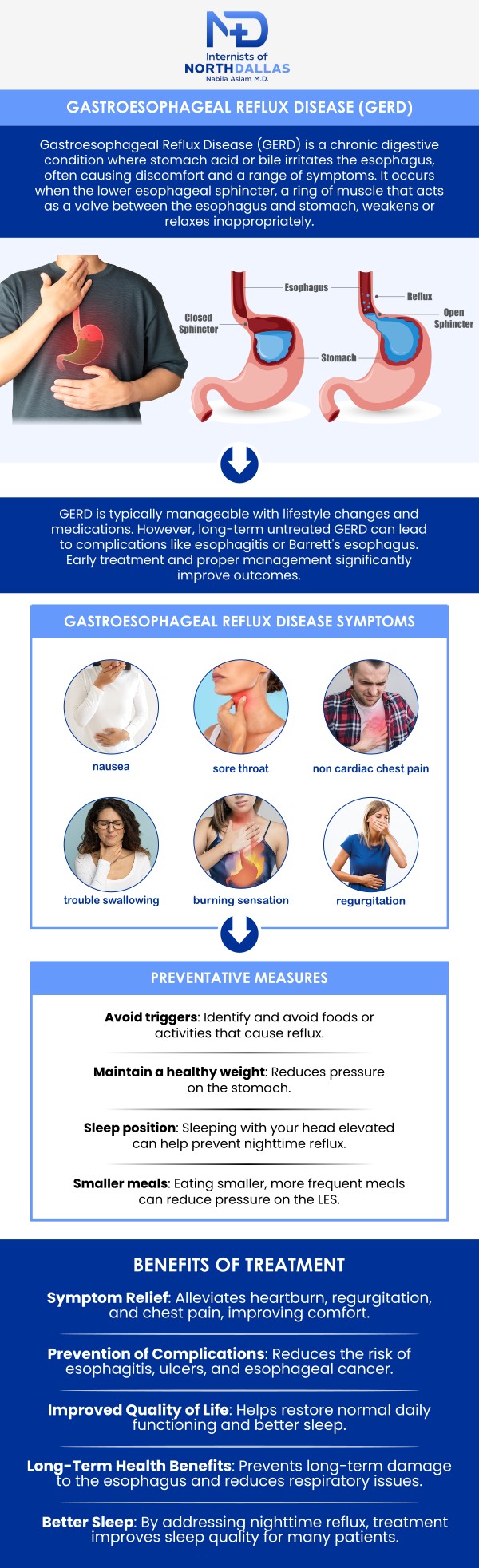
Table of Contents:
What is the main cause of GERD in men?
Why do men get acid reflux more often?
What foods trigger GERD in men?
Can weight gain suddenly cause GERD in men?
Understanding the Causes of GERD in Men with Dr. Nabila Aslam at Internists of North Dallas in Irving, TX
At Internists of North Dallas, our team frequently diagnoses and manages gastroesophageal reflux disease (GERD), a common digestive condition that affects many men. GERD occurs when the lower esophageal sphincter (LES)—a muscular ring at the junction of the esophagus and stomach—does not function properly.
The main causes of GERD in men are often linked to lifestyle factors, underlying health conditions, and biological changes. Some of the key causes include:
• Obesity: Excess weight, especially around the abdomen, increases pressure on the stomach, leading to acid reflux.
• Smoking: Smoking weakens the lower esophageal sphincter (LES), making it easier for stomach acid to flow into the esophagus.
• Dietary habits: Consuming fatty, spicy, or acidic foods, chocolate, caffeine, and alcohol can relax the LES and trigger reflux.
• Hiatal hernia: A condition where part of the stomach pushes through the diaphragm, affecting the LES function.
• Medications: Certain drugs, such as painkillers, muscle relaxants, and blood pressure medications, can relax the LES and increase acid reflux.
• Lack of physical activity: Sedentary lifestyles can contribute to weight gain and worsen GERD symptoms.
• Stress: Chronic stress can increase stomach acid production, leading to reflux.
• Aging: As men age, the risk of developing GERD increases due to changes in the body’s ability to manage stomach acid.
If you are experiencing GERD symptoms, it’s important to seek professional care for effective management. At Internists of North Dallas in Irving, TX, Dr. Nabila Aslam and her team are dedicated to diagnosing and treating GERD with personalized treatment plans tailored to your needs. They focus on identifying the underlying causes, offering lifestyle recommendations, and prescribing medications to help reduce symptoms. With ongoing support and regular follow-ups, you can better manage your condition and improve your overall digestive health.
Men tend to experience acid reflux more frequently due to a combination of lifestyle factors, biological differences, and underlying health conditions. One major factor is that men are more likely to be overweight or obese, especially around the abdominal area. This excess weight puts pressure on the stomach, which can cause the lower esophageal sphincter (LES) to weaken, allowing stomach acid to flow back into the esophagus. Additionally, certain habits such as smoking, drinking alcohol, and consuming a diet high in fatty, spicy, or acidic foods can contribute to an increased risk of acid reflux.
Biologically, men are more prone to certain health conditions that can make them susceptible to acid reflux, such as hiatal hernias, which occur when part of the stomach pushes through the diaphragm into the chest. This can interfere with the LES’s ability to prevent acid from escaping into the esophagus. Men also tend to experience more severe cases of GERD, which may result in more frequent and prolonged acid reflux episodes.
If you are experiencing acid reflux symptoms, it’s important to seek professional care to manage and alleviate them. At Internists of North Dallas, Dr. Nabila Aslam specializes in diagnosing and treating acid reflux and GERD in men, offering personalized treatment plans to help reduce symptoms and improve digestive health.
At Internists of North Dallas, we frequently help patients manage gastroesophageal reflux disease (GERD)—a condition where stomach acid frequently flows back into the esophagus, causing symptoms like heartburn, chest discomfort, and regurgitation. Certain foods can trigger GERD symptoms in men by relaxing the lower esophageal sphincter or increasing stomach acid production. Common trigger foods include:
• Fatty or fried foods (e.g., fried chicken, French fries)
• Spicy foods (e.g., hot peppers, chili)
• Citrus fruits (e.g., oranges, grapefruits)
• Tomatoes and tomato-based products (e.g., spaghetti sauce, ketchup)
• Chocolate
• Caffeinated beverages (e.g., coffee, soda)
• Carbonated drinks (e.g., soda, sparkling water)
• Alcohol, especially red wine and beer
• Garlic and onions
• Mint (e.g., peppermint, spearmint)
• Dairy products, particularly full-fat milk or cheese
• Processed foods high in salt or preservatives
• Carbonated beverages like soda and sparkling water
Avoiding these trigger foods can help reduce GERD symptoms and improve digestive health. It’s important to identify personal triggers, as they can vary from person to person. At Internists of North Dallas, we recommend keeping a food diary to help identify your personal triggers and making lifestyle changes like eating smaller, more frequent meals and maintaining a healthy weight.
If you continue to experience GERD symptoms despite these adjustments, our experienced physicians can provide personalized management strategies and treatment options tailored to your needs. Our team is committed to helping you achieve optimal digestive health and live more comfortably.
At Internists of North Dallas, we recognize that sudden weight gain can play a significant role in the development or worsening of gastroesophageal reflux disease (GERD), especially in men. Excess weight, particularly around the abdomen, puts pressure on the stomach, which can cause the lower esophageal sphincter (LES) to weaken. The LES is responsible for preventing stomach acid from flowing back into the esophagus, and when it becomes compromised, acid reflux can occur more frequently. Weight gain, especially in the abdominal area, can exacerbate this issue, making it easier for acid to escape into the esophagus.
Additionally, increased body mass can lead to a higher production of stomach acid, further aggravating GERD symptoms such as heartburn, chest pain, and regurgitation. Poor dietary habits that often accompany weight gain, such as eating fatty or spicy foods, can also trigger acid reflux. Therefore, managing weight gain and maintaining a healthy weight are essential steps in controlling GERD.
If you are experiencing symptoms of GERD following sudden weight gain, it’s important to consult with a healthcare provider. At Internists of North Dallas in Irving, TX, Dr. Nabila Aslam offers comprehensive care for GERD and works with patients to identify and address the underlying causes, including weight management, to help reduce symptoms and improve quality of life.
GERD (Gastroesophageal Reflux Disease) in men can occur due to various factors that affect the function of the lower esophageal sphincter, leading to acid reflux. Dr. Nabila Aslam at Internists of North Dallas in Irving, TX, specializes in diagnosing and treating GERD, focusing on understanding its root causes. Common causes include obesity, smoking, alcohol consumption, and a diet high in acidic or fatty foods. Hormonal changes and lifestyle habits can also contribute to the development of GERD in men, making early diagnosis and intervention crucial.
Dr. Aslam works closely with her patients to develop personalized treatment plans, which may include dietary changes, medications to reduce stomach acid, and lifestyle modifications to prevent reflux episodes. By addressing the underlying causes, Dr. Aslam helps men manage GERD effectively, improving their digestive health and overall well-being. Regular follow-ups are also essential to ensure the condition is well-controlled and to prevent complications.
For more information, contact us or schedule an appointment online. We are conveniently located at 4500 N MacArthur Blvd #130, Irving, TX 75038. We serve patients from Irving TX, Coppell TX, Euless TX, Las Colinas TX, Farmers Branch TX, Valley Ranch TX, and surrounding areas.

Check Out Our 5 Star Reviews


Additional Services You May Need
Additional Services You May Need
▸ Primary Care
▸ Internal Medicine
▸ Geriatrics
▸ Diabetes
▸ Physical Exam
▸ Vaccinations
▸ Chest Pain
▸ Chronic Care Management
▸ Hypertension
▸ Common Cold
▸ Arthritis
▸ Allergies
▸ Acute Care
▸ Women’s Health
▸ Wellness
▸ Annual Physical
▸ Sickness Visits
▸ Anxiety and Depression
▸ Congestive Heart Failure
▸ COPD
▸ Gerd
▸ Hypothyroidism
▸ Alzheimer’s disease
▸ Dementia
▸ Acid Reflux
 4500 N MacArthur Blvd #130, Irving, TX 75038
 Call Now
 Monday - Friday: 8:00 AM - 5:00 PM


 Send Text
 How May I Help You?