

Alzheimer’s Vs Dementia – What Is the Difference?
Dementia is a broad term for cognitive decline, while Alzheimer’s is a specific form of dementia. Understanding the distinction is key to diagnosis, treatment, and care planning. Dr. Nabila Aslam, M.D., and the team at Internists of North Dallas provide thorough assessments, personalized care strategies, and family guidance to address both conditions. Educating patients and caregivers ensures informed decisions and better long-term outcomes. For more information, contact us or schedule an appointment online. We are conveniently located at 4500 N MacArthur Blvd #130, Irving, TX 75038.
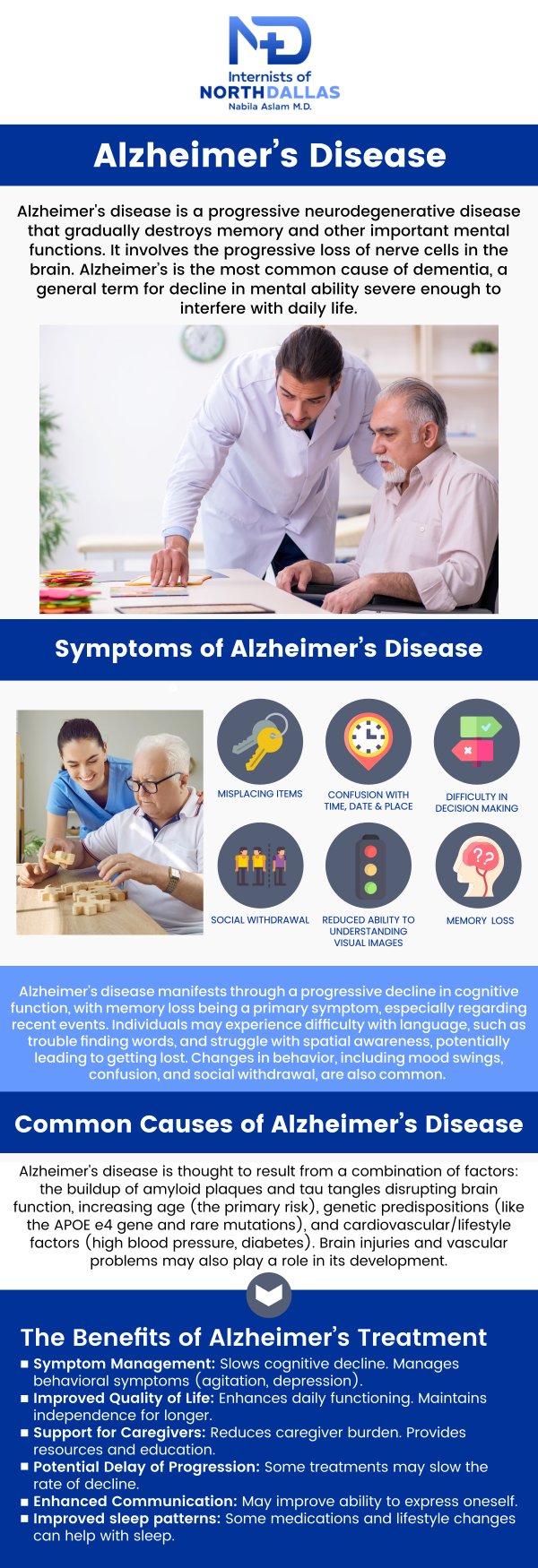
Table of Contents:
What is the difference between Alzheimer’s and dementia?
Is Alzheimer’s a type of dementia?
What are the common symptoms of dementia and how do they differ from Alzheimer’s symptoms?
What are the genetic risk factors for Alzheimer’s and dementia?
Managing Alzheimer’s Disease and Dementia: How Dr. Nabila Aslam, M.D., and the Team at Internists of North Dallas Help Patients and Families
Alzheimer’s disease and dementia are related, but not the same, and understanding the distinction is important:
• Dementia is an umbrella term: It describes a set of symptoms affecting memory, thinking, reasoning, and daily functioning, rather than a single disease.
• Alzheimer’s is a specific disease: It is the most common cause of dementia, characterized by abnormal protein deposits in the brain that damage nerve cells.
• Symptoms overlap but vary: Dementia can result from many causes, including vascular disease, Lewy body dementia, or frontotemporal degeneration, each presenting differently. Alzheimer’s typically begins with memory loss and gradually affects other cognitive functions.
• Progression differs: Alzheimer’s disease usually progresses slowly over several years, while some other types of dementia, like vascular dementia, can progress in steps or fluctuate.
• Treatment approaches: Dementia management depends on the underlying cause. Alzheimer’s treatments focus on slowing symptom progression, supporting cognitive function, and improving quality of life.
• Diagnosis: Dementia is diagnosed based on observed symptoms and cognitive testing, while Alzheimer’s requires more specific assessments to identify characteristic brain changes.
At Internists of North Dallas, our physicians are experienced in evaluating memory concerns, diagnosing different types of dementia, and developing personalized care plans. We work closely with patients and their families to provide support, education, and guidance throughout every stage of these conditions. If you or a loved one is experiencing memory loss or changes in thinking, our team is here to help with comprehensive assessments and ongoing care.
Alzheimer’s disease is the most common form of dementia, which is a general term describing a significant decline in cognitive abilities such as memory, thinking, and social skills. Dementia affects daily functioning and quality of life, and Alzheimer’s accounts for 60 to 80 percent of all dementia cases. Recognizing Alzheimer’s as a specific type of dementia helps guide diagnosis, management, and care planning.
While Alzheimer’s is the leading cause, not all dementia is due to this disease. Other forms include vascular dementia, Lewy body dementia, and frontotemporal dementia, each with distinct symptoms and progression patterns. Alzheimer’s is characterized by progressive memory loss, difficulties with reasoning or problem-solving, and changes in behavior or personality, resulting from ongoing damage to brain cells and a gradual decline in cognitive function over time.
At Internists of North Dallas, Dr. Nabila Aslam, M.D., and our team provide comprehensive evaluation, diagnosis, and management for Alzheimer’s and other types of dementia. We work closely with patients and families to create personalized care plans, provide guidance on treatment options, and connect them with supportive resources. Understanding the differences between Alzheimer’s and other forms of dementia is essential for effective care and improving overall quality of life.
At Internists of North Dallas, we frequently help patients and families navigate the challenges of dementia, a broad term for conditions that cause significant changes in memory, thinking, and social abilities. These symptoms can become severe enough to interfere with everyday life, and early recognition is key to providing the best care and support.
Common Symptoms of Dementia:
• Memory Loss: Difficulty remembering recent events, names, or appointments.
• Confusion: Getting lost in familiar places or losing track of time and dates.
• Difficulty with Daily Tasks: Trouble managing finances, cooking, or following routines.
• Language Problems: Struggling to find words, repeating questions, or having difficulty understanding conversations.
• Poor Judgment: Making uncharacteristic decisions or showing decreased safety awareness.
• Mood or Personality Changes: Anxiety, depression, irritability, or withdrawal from social activities.
Symptoms More Specific to Alzheimer’s Disease:
• Progressive Memory Decline: Gradual worsening of short-term memory and eventual long-term memory loss.
• Difficulty Learning or Retaining New Information: Challenges with acquiring new skills or remembering recent conversations.
• Disorientation to Time and Place: Confusion about dates, seasons, or familiar locations occurs early in Alzheimer’s.
• Behavioral Changes: Increased apathy, repetitive behaviors, or significant personality shifts.
• Impaired Problem-Solving or Reasoning: Difficulty planning, organizing, or making previously manageable decisions.
Dr. Nabila Aslam, M.D., and the team at Internists of North Dallas help patients and families distinguish between general dementia symptoms and those specific to Alzheimer’s through thorough evaluations, cognitive testing, and personalized care plans tailored to each patient’s needs.
At Internists of North Dallas, our team is dedicated to providing comprehensive and personalized care for our patients, including those concerned about memory loss, cognitive health, or a family history of dementia. Certain genetic factors can increase a person’s likelihood of developing Alzheimer’s or other types of dementia. Key risk factors include:
• Family History: Having a parent, sibling, or close relative with Alzheimer’s or dementia increases your risk.
• APOE-e4 Gene Variant: Possessing one or two copies of the apolipoprotein E (APOE) e4 allele is associated with a higher risk of developing Alzheimer’s disease.
• Rare Genetic Mutations: Mutations in genes such as PSEN1, PSEN2, and APP can lead to early-onset familial Alzheimer’s, which typically appears before age 65.
• Down Syndrome: Individuals with Down syndrome have a higher likelihood of developing Alzheimer’s disease due to the presence of an extra copy of chromosome 21.
• Other Genetic Influences: Emerging research suggests multiple other genes may modestly affect risk for different forms of dementia, often interacting with environmental and lifestyle factors.
At Internists of North Dallas, our team assesses genetic and family history factors as part of comprehensive evaluations for patients concerned about dementia or Alzheimer’s, helping guide personalized risk management and care strategies.
Managing Alzheimer’s disease and other forms of dementia requires a comprehensive, patient-centered approach. At Internists of North Dallas, Dr. Nabila Aslam, M.D., and our team provide thorough evaluations to understand each patient’s unique cognitive challenges. Through detailed medical history, cognitive assessments, and diagnostic testing, we identify the specific type and progression of dementia. This allows us to develop personalized care plans that address memory loss, behavioral changes, and daily functioning, while supporting patients in maintaining independence and quality of life.
Our team works closely with families to provide guidance, education, and resources for caregiving. We offer strategies for symptom management, lifestyle modifications, and coordination with specialists when needed. By fostering a collaborative, compassionate environment, Dr. Aslam and the Internists of North Dallas team ensure that both patients and their loved ones receive the support, knowledge, and care necessary to navigate the challenges of Alzheimer’s and dementia effectively.
For more information, contact us or schedule an appointment online. We are conveniently located at 4500 N MacArthur Blvd #130, Irving, TX 75038. We serve patients from Irving TX, Coppell TX, Euless TX, Las Colinas TX, Farmers Branch TX, Valley Ranch TX, and surrounding areas.

Check Out Our 5 Star Reviews


Additional Services You May Need
Additional Services You May Need
▸ Primary Care
▸ Internal Medicine
▸ Geriatrics
▸ Diabetes
▸ Physical Exam
▸ Vaccinations
▸ Chest Pain
▸ Chronic Care Management
▸ Hypertension
▸ Common Cold
▸ Arthritis
▸ Allergies
▸ Acute Care
▸ Women’s Health
▸ Wellness
▸ Annual Physical
▸ Sickness Visits
▸ Anxiety and Depression
▸ Congestive Heart Failure
▸ COPD
▸ Gerd
▸ Hypothyroidism
▸ Alzheimer’s disease
▸ Dementia
▸ Acid Reflux
 4500 N MacArthur Blvd #130, Irving, TX 75038
 Call Now
 Monday - Friday: 8:00 AM - 5:00 PM


 Send Text
 How May I Help You?