


What Are the Common Symptoms of Chronic GERD?
Chronic GERD (Gastroesophageal Reflux Disease) causes a variety of symptoms that can significantly affect your quality of life. Common symptoms include frequent heartburn, regurgitation of food or sour liquid, chest pain, difficulty swallowing, and a persistent cough. At Internists of North Dallas, Dr. Nabila Aslam, MD, specializes in diagnosing and managing GERD to help you find relief and improve your quality of life. For more information, contact us or schedule an appointment online. We are conveniently located at 4500 N MacArthur Blvd #130, Irving, TX 75038.
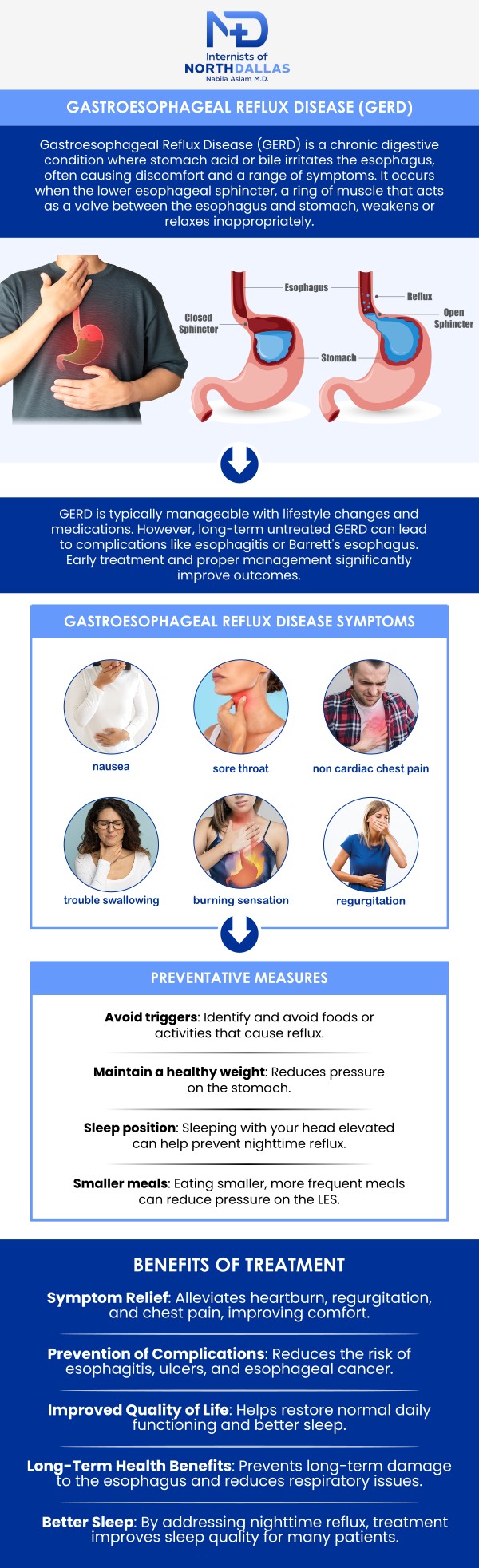
Table of Contents:
What are the most common symptoms of chronic GERD?
Can chronic GERD cause chest pain or discomfort?
Is heartburn a constant symptom in chronic GERD?
Are there long-term complications of chronic GERD symptoms?
Dealing with Chronic GERD Symptoms: How Dr. Nabila Aslam, MD, Can Help
Chronic gastroesophageal reflux disease (GERD) is a common condition that we frequently diagnose and manage at Internists of North Dallas. GERD often presents with a variety of symptoms that can significantly impact your daily life. Chronic GERD (Gastroesophageal Reflux Disease) can lead to a variety of uncomfortable symptoms that affect daily life. Here are the most common symptoms:
• Frequent heartburn: A persistent burning sensation in the chest, often after eating or lying down.
• Regurgitation of food or sour liquid: The sensation of food or acid coming back up into the throat or mouth.
• Chest pain or discomfort: A sharp or burning pain that may mimic heart-related issues.
• Difficulty swallowing (dysphagia): A feeling that food is stuck in the throat or chest.
• Persistent cough: A chronic cough that doesn’t seem to go away, especially at night.
• Sore throat or hoarseness: Irritation of the throat due to acid exposure.
• Feeling of a lump in the throat: Often referred to as “globus sensation,” this is the sensation of something stuck in the throat.
• Bloating or nausea after eating: An uncomfortable feeling of fullness or queasiness, especially after meals.
• Bad breath (halitosis): An unpleasant odor from the mouth due to acid reflux.
If you are experiencing any of these symptoms regularly, the physicians at Internists of North Dallas are here to help. Our experienced team can provide a thorough evaluation, accurate diagnosis, and a personalized treatment plan to help manage your symptoms and improve your quality of life.
Chronic gastroesophageal reflux disease (GERD) is a common condition we see at Internists of North Dallas. GERD occurs when stomach acid frequently flows back into the esophagus, irritating its lining. This backflow can lead to a burning sensation in the chest, often referred to as heartburn. Some patients may also experience a dull ache, a sensation of pressure, or even sharp pain in the middle of the chest—symptoms that are sometimes mistaken for heart issues.
It’s important to note that GERD-related chest pain typically worsens after eating, when lying down, or when bending over, and may improve with antacids. However, chest pain should never be ignored, as it can also be a sign of more serious conditions, such as a heart attack. If you experience severe or sudden chest pain, or if the pain is accompanied by shortness of breath, sweating, or pain radiating to your arm or jaw, seek emergency medical attention immediately.
If you have chronic GERD and ongoing chest discomfort, we encourage you to schedule a consultation with one of our experienced physicians at Internists of North Dallas. Our team will work with you to ensure a proper diagnosis, exclude other potential causes, and develop a personalized treatment plan to effectively manage your symptoms. Proper management of GERD can help reduce chest discomfort and improve your overall quality of life.
At Internists of North Dallas, we often see patients concerned about heartburn and its connection to gastroesophageal reflux disease (GERD). Heartburn is one of the most common and characteristic symptoms of GERD, but it is not always constant. People with GERD often experience heartburn after eating, especially with large or spicy meals, or when lying down shortly after eating. It occurs when stomach acid backs up into the esophagus, causing a burning sensation in the chest or throat. While heartburn may be frequent in some individuals, others might experience it intermittently, depending on their lifestyle, diet, and the severity of their condition.
Even though heartburn may not be constant, it can become more severe over time if GERD is left untreated. Chronic acid reflux can lead to other complications, such as damage to the esophagus, narrowing, or even the development of Barrett’s esophagus. If heartburn is persistent, it’s important to seek medical attention to manage the condition and prevent further damage to the esophagus.
Our team at Internists of North Dallas is here to help you identify the underlying cause of your symptoms and develop a personalized treatment plan. Because GERD can manifest in so many ways, we recommend that anyone experiencing persistent digestive symptoms or changes in their usual pattern seek a professional evaluation.
At Internists of North Dallas, we understand the impact that chronic gastroesophageal reflux disease (GERD) can have on your health and quality of life. GERD occurs when stomach acid frequently flows back into the esophagus, irritating its lining. Chronic GERD can lead to several long-term complications if left untreated. Over time, the constant acid reflux can cause damage to the esophagus and other parts of the body. Here are some of the potential long-term complications:
• Esophageal Strictures: Narrowing of the esophagus caused by repeated scarring and damage from stomach acid, making it difficult to swallow.
• Barrett’s Esophagus: A condition where the lining of the esophagus changes due to chronic acid exposure, increasing the risk of esophageal cancer.
• Esophageal Ulcers: Open sores or sores in the esophagus caused by stomach acid that can lead to bleeding, pain, and difficulty swallowing.
• Dental Erosion: Stomach acid reaching the mouth can erode tooth enamel, leading to cavities and other dental issues.
• Respiratory Problems: Chronic GERD can contribute to asthma, chronic cough, or even pneumonia, as acid reflux can be inhaled into the lungs.
• Chronic Laryngitis: Long-term acid exposure can cause inflammation in the voice box, leading to hoarseness and sore throat.
• Sleep Apnea: GERD can worsen sleep apnea symptoms, making it more difficult to breathe during sleep.
• Increased Risk of Esophageal Cancer: Untreated GERD, especially with conditions like Barrett’s esophagus, can significantly increase the risk of developing esophageal cancer over time.
Managing GERD is essential to prevent these severe complications and protect your overall health. At Internists of North Dallas, our experienced physicians emphasize the importance of early evaluation and comprehensive management of GERD. Prompt diagnosis and tailored treatment can help prevent complications and improve your quality of life.
Chronic GERD can significantly impact your quality of life, but with the right treatment, it’s possible to manage and reduce symptoms. Dr. Nabila Aslam, MD, at Internists of North Dallas, specializes in diagnosing and treating GERD with a comprehensive approach. She takes the time to thoroughly assess each patient’s symptoms and medical history to create an individualized treatment plan. This may include lifestyle modifications, medications, and in some cases, referrals to specialists for further evaluation.
Dr. Aslam emphasizes the importance of early intervention in preventing long-term complications of GERD, such as esophageal damage or Barrett’s esophagus. By working closely with her patients, she helps them find relief from symptoms like heartburn, regurgitation, and difficulty swallowing. Whether through medication management or guiding dietary and lifestyle changes, Dr. Nabila Aslam, MD, is committed to helping patients manage their chronic GERD symptoms and improve their overall health.
For more information, contact us or schedule an appointment online. We are conveniently located at 4500 N MacArthur Blvd #130, Irving, TX 75038. We serve patients from Irving TX, Coppell TX, Euless TX, Las Colinas TX, Farmers Branch TX, Valley Ranch TX, and surrounding areas.

Check Out Our 5 Star Reviews


Additional Services You May Need
Additional Services You May Need
▸ Primary Care
▸ Internal Medicine
▸ Geriatrics
▸ Diabetes
▸ Physical Exam
▸ Vaccinations
▸ Chest Pain
▸ Chronic Care Management
▸ Hypertension
▸ Common Cold
▸ Arthritis
▸ Allergies
▸ Acute Care
▸ Women’s Health
▸ Wellness
▸ Annual Physical
▸ Sickness Visits
▸ Anxiety and Depression
▸ Congestive Heart Failure
▸ COPD
▸ Gerd
▸ Hypothyroidism
▸ Alzheimer’s disease
▸ Dementia
▸ Acid Reflux
 4500 N MacArthur Blvd #130, Irving, TX 75038
 Call Now
 Monday - Friday: 8:00 AM - 5:00 PM


 Send Text
 How May I Help You?