


When to See a Doctor for Gastroesophageal Reflux Disease (GERD) Symptoms
Gastroesophageal Reflux Disease (GERD) can cause persistent heartburn, chest discomfort, and regurgitation, affecting daily comfort and long-term digestive health. Early evaluation helps prevent complications such as esophageal inflammation or Barrett’s esophagus. At Internists of North Dallas, Dr. Nabila Aslam, M.D, provides personalized care plans, including lifestyle guidance, dietary modifications, and symptom monitoring, ensuring effective and safe management of GERD. For more information, contact us or schedule an appointment online. We are conveniently located at 4500 N MacArthur Blvd #130, Irving, TX 75038.
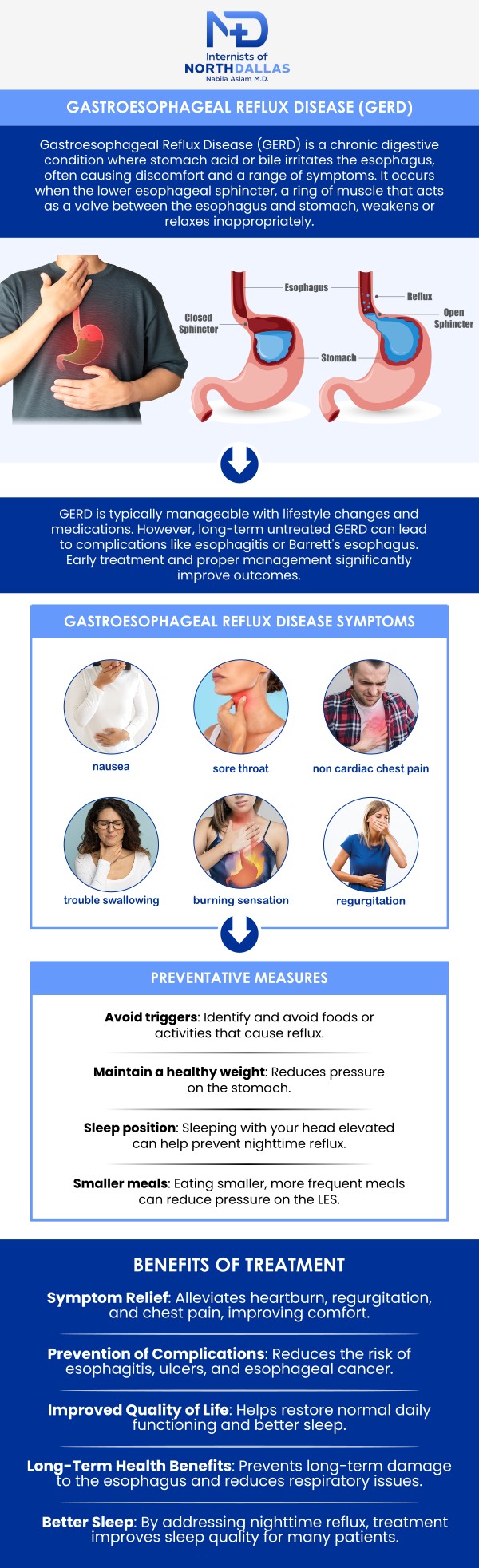
Table of Contents:
What are the common symptoms of Gastroesophageal Reflux Disease (GERD)?
How does Gastroesophageal Reflux Disease (GERD) cause heartburn?
Can Gastroesophageal Reflux Disease (GERD) cause chest pain?
Does GERD cause nausea or vomiting?
Understanding Gastroesophageal Reflux Disease (GERD) Symptoms: How Dr. Nabila Aslam, M.D. and the Team at Internists of North Dallas Can Help
Frequent reflux of stomach acid into the esophagus, the tube that connects your mouth and stomach, is known as gastroesophageal reflux disease (GERD). This acid reflux can cause several unpleasant symptoms by irritating the esophageal lining. Early detection of these symptoms can aid in controlling the illness and averting consequences.
Common Symptoms of GERD:
• Heartburn: A burning sensation in the chest, often after eating, which may worsen at night or when lying down.
• Regurgitation: The sensation of acid backing up into your throat or mouth, producing a sour or bitter taste.
• Difficulty Swallowing (Dysphagia): A feeling of food being stuck in the throat or chest.
• Chest Pain: Can sometimes mimic heart-related pain, usually occurring after meals.
• Chronic Cough or Sore Throat: Irritation from acid can trigger persistent coughing or throat discomfort.
• Hoarseness or Laryngitis: Acid exposure can affect the vocal cords, leading to a raspy voice.
• Nausea: Some patients experience frequent nausea.
• Bloating or Feeling of Fullness: Stomach discomfort or pressure after meals.
Early recognition of these symptoms is important to prevent further complications, such as esophageal inflammation or Barrett’s esophagus. Internists of North Dallas can provide guidance and support in managing GERD effectively.
One of the most common signs of GERD is heartburn, which is characterized by a burning feeling in the esophagus or chest. This occurs when the lower esophageal sphincter (LES), the muscular valve that separates the stomach from the esophagus, becomes weakened or relaxes inappropriately. When this happens, stomach acid can flow back, or reflux, into the esophagus, irritating the sensitive lining and triggering the sensation of burning.
Certain factors can exacerbate heartburn in GERD, including large meals, lying down shortly after eating, consuming fatty or spicy foods, and excess caffeine or alcohol. Even mild reflux episodes, if frequent, can lead to persistent discomfort. The esophagus does not have the same protective lining as the stomach, so exposure to acid leads to inflammation, which is sensed as heartburn.
Managing heartburn often involves lifestyle modifications, dietary adjustments, and sometimes medications that reduce stomach acid. For professional evaluation and guidance on controlling GERD-related heartburn, patients can consult Internists of North Dallas, where the team provides personalized strategies to manage symptoms effectively.
GERD can indeed cause chest pain, which may be mistaken for heart-related issues. The pain typically results from acid reflux irritating the lining of the esophagus, leading to inflammation and discomfort in the chest area. This pain is often described as a burning or pressure-like sensation that occurs after eating or when lying down.
The intensity and timing of chest pain caused by GERD can vary. Some individuals may experience sharp, sudden pain, while others notice a more constant, dull ache. Stress, certain foods, or large meals can trigger or worsen the discomfort. Unlike cardiac chest pain, GERD-related chest pain is often accompanied by other symptoms such as regurgitation, sour taste, or heartburn.
Because chest pain can resemble heart problems, proper examination is crucial. In addition to providing techniques to lessen reflux episodes and safeguard the esophagus, North Dallas internists can assist in distinguishing GERD-related chest discomfort from other causes.
Nausea and vomiting can be associated with GERD, though they are less common than heartburn or regurgitation. The backflow of stomach contents into the esophagus can create a sensation of fullness or queasiness, which sometimes triggers nausea. In severe cases, prolonged acid exposure may even lead to vomiting.
Large meals, lying down too soon after eating, and consuming trigger foods like fatty, spicy, or acidic foods are common causes of GERD-related nausea. Individual differences exist in the frequency and intensity of nausea, and prolonged symptoms may be a sign of problems such as esophagitis or delayed gastric emptying.
Managing nausea and vomiting related to GERD involves both lifestyle adjustments and medical guidance. For tailored care and treatment options, patients can turn to Internists of North Dallas, where the team offers comprehensive support to address all symptoms of GERD and improve overall digestive health.
Gastroesophageal Reflux Disease (GERD) is a chronic digestive condition in which stomach acid flows back into the esophagus, irritating its lining. Patients may experience heartburn, regurgitation, chest discomfort, difficulty swallowing, chronic cough, hoarseness, nausea, or bloating. Frequent or severe reflux can lead to complications such as esophagitis, strictures, or Barrett’s esophagus, making accurate evaluation and physician-led management essential.
Dr. Nabila Aslam, M.D., a board-certified physician with over 20 years of experience, and the team at Internists of North Dallas offer comprehensive, doctor-directed care for GERD. Their approach includes a detailed assessment of symptoms, individualized treatment plans, lifestyle and dietary guidance, and, when appropriate, medication management. With ongoing physician supervision, patients receive expert strategies to reduce reflux, protect esophageal health, and improve overall digestive wellness.
For more information, contact us or schedule an appointment online. We are conveniently located at 4500 N MacArthur Blvd #130, Irving, TX 75038. We serve patients from Irving TX, Coppell TX, Euless TX, Las Colinas TX, Farmers Branch TX, Valley Ranch TX, and surrounding areas.

Check Out Our 5 Star Reviews


Additional Services You May Need
Additional Services You May Need
▸ Primary Care
▸ Internal Medicine
▸ Geriatrics
▸ Diabetes
▸ Physical Exam
▸ Vaccinations
▸ Chest Pain
▸ Chronic Care Management
▸ Hypertension
▸ Common Cold
▸ Arthritis
▸ Allergies
▸ Acute Care
▸ Women’s Health
▸ Wellness
▸ Annual Physical
▸ Sickness Visits
▸ Anxiety and Depression
▸ Congestive Heart Failure
▸ COPD
▸ Gerd
▸ Hypothyroidism
▸ Alzheimer’s disease
▸ Dementia
▸ Acid Reflux
 4500 N MacArthur Blvd #130, Irving, TX 75038
 Call Now
 Monday - Friday: 8:00 AM - 5:00 PM


 Send Text
 How May I Help You?