


What Causes Chest Pain and When Should You See a Doctor?
Chest pain can have many causes, ranging from minor issues like muscle strain or acid reflux to serious conditions such as heart disease. Recognizing the type, intensity, and frequency of chest discomfort is critical for timely evaluation. At Internists of North Dallas, our team, led by Dr. Nabila Aslam, M.D., conducts thorough assessments including physical exams, diagnostic tests, and patient history to identify the underlying cause. For more information, contact us or schedule an appointment online. We are conveniently located at 4500 N MacArthur Blvd #130, Irving, TX 75038.
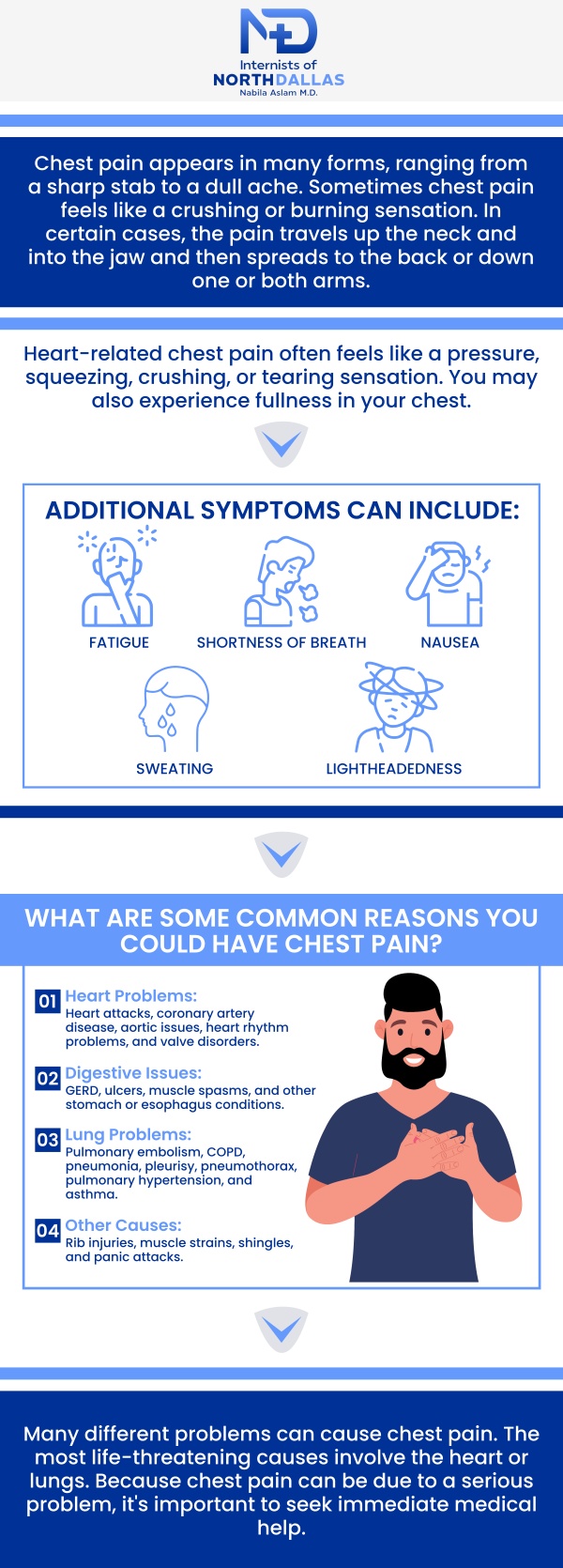
Table of Contents:
What causes chest pain?
When should I see a doctor for chest pain?
Is chest pain always related to the heart?
Can anxiety cause chest pain?
Can chest pain be caused by acid reflux?
Effective Treatment for Chest Pain: Dr. Nabila Aslam, M.D. at Internists of North Dallas Provides Care
At Internists of North Dallas, we understand that chest pain can be alarming and may have a wide range of causes. While chest pain is often associated with heart conditions, it can also result from issues in the lungs, digestive system, muscles, bones, or even psychological factors. Chest pain can stem from a wide range of conditions, some minor and others potentially serious. Common causes include:
• Heart-Related Conditions: Angina, heart attack, pericarditis (inflammation of the heart lining), or cardiomyopathy.
• Gastroesophageal Reflux Disease (GERD): Acid reflux or heartburn causes a burning sensation.
• Muscle or Bone Strain: Overuse, injury, heavy lifting, or inflammation of the chest muscles or ribs.
• Lung Conditions: Pneumonia, pulmonary embolism, pleuritis (inflammation of the lung lining), or collapsed lung (pneumothorax).
• Anxiety or Panic Attacks: Stress and anxiety triggering tightness, pressure, or sharp chest pain.
• Esophageal Issues: Spasms, inflammation, or blockage in the esophagus.
• Digestive Disorders: Gallbladder problems, pancreatitis, or hiatal hernia.
• Infections or Inflammation: Shingles affecting the chest nerves or infections causing localized pain.
• Other Causes: Costochondritis (inflammation of the rib cartilage), certain medications, or trauma to the chest area.
At Internists of North Dallas, Dr. Nabila Aslam, M.D., and our team carefully evaluate chest pain to determine the underlying cause and develop a safe, individualized treatment plan. If you’re experiencing chest pain, the physicians at Internists of North Dallas are here to help. We offer thorough evaluations and personalized treatment plans to address the underlying cause of your symptoms and support your overall health and well-being.
At Internists of North Dallas, we understand that chest pain can be alarming and may be caused by a variety of conditions—some of which can be serious and require urgent medical attention. Knowing when to seek medical attention is critical for your safety and overall well-being.
When to See a Doctor for Chest Pain:
• Sudden or Severe Pain: Any sudden, intense, or crushing chest pain should be evaluated immediately.
• Pain with Shortness of Breath: Chest discomfort accompanied by difficulty breathing, lightheadedness, or fainting is urgent.
• Radiating Pain: Pain spreading to the arm, jaw, neck, or back may signal a heart-related issue.
• Persistent or Recurring Pain: Ongoing or repeated chest discomfort, even if mild, warrants medical assessment.
• Associated Symptoms: Chest pain with sweating, nausea, palpitations, or a sense of impending doom requires prompt attention.
At Internists of North Dallas, Dr. Nabila Aslam, M.D., and our team provide thorough evaluations for patients experiencing chest pain. We carefully identify the underlying cause—whether heart-related, digestive, muscular, or anxiety-induced—and create personalized treatment plans to ensure your safety and long-term well-being. Early consultation is key to effective care and peace of mind.
Chest pain can arise from a variety of causes and is not always related to the heart. While heart conditions such as angina or a heart attack are serious causes of chest pain, many other factors—including digestive, muscular, respiratory, and psychological issues—can also lead to discomfort in the chest area. Understanding the potential causes helps ensure timely evaluation and proper treatment.
Common Non-Heart Causes of Chest Pain:
• Gastroesophageal Reflux Disease (GERD): Acid reflux can cause a burning sensation in the chest, often mistaken for heart-related pain.
• Muscle Strain: Overuse, heavy lifting, or injury can strain chest muscles, causing sharp or aching pain.
• Respiratory Conditions: Infections, pneumonia, or inflammation of the lungs or pleura can result in chest discomfort.
• Anxiety or Panic Attacks: Stress and anxiety can trigger chest pain, rapid heartbeat, and shortness of breath.
• Other Causes: Conditions such as costochondritis (inflammation of the rib cartilage) or shingles can also present with chest pain.
Proper evaluation by a physician, such as Dr. Nabila Aslam, M.D., and the team at Internists of North Dallas, is essential to rule out serious heart conditions and determine the underlying cause, allowing for safe and effective treatment.
Anxiety can indeed cause chest pain, and it’s a common concern for many patients at Internists of North Dallas. When the body experiences anxiety, it triggers the “fight or flight” response, releasing stress hormones such as adrenaline. This can lead to a faster heartbeat, muscle tension, and changes in breathing patterns, which may produce sensations of tightness, pressure, or sharp pain in the chest.
Chest pain related to anxiety often comes on suddenly and can feel sharp, stabbing, or like a dull ache. It may be accompanied by other symptoms such as shortness of breath, rapid heartbeat, sweating, dizziness, or a sense of impending doom. Unlike pain from physical exertion, anxiety-related chest discomfort often improves with relaxation, distraction, or stress-reduction techniques, and it may occur even when the body is at rest.
At Internists of North Dallas, Dr. Nabila Aslam, M.D., and our team carefully evaluate all patients experiencing chest pain to rule out serious heart or lung conditions. If anxiety is identified as the cause, we create personalized treatment plans that may include counseling, relaxation strategies, lifestyle guidance, exercise, or medication when appropriate. Understanding the link between anxiety and physical symptoms helps patients manage their health more effectively while ensuring both physical and mental well-being.
Chest pain can indeed be caused by acid reflux, a condition also known as gastroesophageal reflux disease (GERD). At Internists of North Dallas in Irving, TX, we often evaluate patients who report chest discomfort to determine if GERD may be the underlying cause. Acid reflux occurs when stomach acid flows back into the esophagus, irritating its lining and causing a burning sensation called heartburn. This can present as chest pain that feels sharp, burning, or pressure-like, sometimes making it difficult to distinguish from heart-related pain due to its location.
Symptoms of chest pain caused by acid reflux often occur after meals, when lying down, or during activities that bend or compress the abdomen. Patients may also experience a sour or bitter taste in the mouth, regurgitation of food or liquid, difficulty swallowing, or a persistent cough. Recognizing these patterns helps our team differentiate GERD-related chest pain from other potential causes.
While acid reflux is a common cause, not all chest pain is related to the digestive system. Conditions such as heart disease, lung issues, or muscular strain can also lead to similar discomfort. At Internists of North Dallas, Dr. Nabila Aslam, M.D., and our team provide thorough evaluations to identify the root cause of chest pain and develop individualized treatment plans. Our goal is to manage symptoms effectively while ensuring patients receive the right care for their overall health and well-being.
Chest pain can signal a range of health issues, from mild conditions like muscle strain or acid reflux to more serious cardiovascular problems. Dr. Nabila Aslam, M.D., and the team at Internists of North Dallas in Irving, TX, provide thorough evaluations to determine the underlying cause of chest discomfort. Through a combination of patient history, physical examinations, and diagnostic testing, our team ensures accurate identification of potential risks and appropriate interventions tailored to each patient’s needs.
Once the cause is determined, Dr. Aslam and our team develop individualized treatment plans that may include lifestyle modifications, medication guidance, or referrals to specialists when necessary. Our approach emphasizes prevention, monitoring, and patient education to reduce complications and improve overall heart and lung health. Patients can trust our clinic to provide compassionate, evidence-based care designed to address both immediate symptoms and long-term wellness.
For more information, contact us or schedule an appointment online. We are conveniently located at 4500 N MacArthur Blvd #130, Irving, TX 75038. We serve patients from Irving TX, Coppell TX, Euless TX, Las Colinas TX, Farmers Branch TX, Valley Ranch TX, and surrounding areas.

Check Out Our 5 Star Reviews


Additional Services You May Need
Additional Services You May Need
▸ Primary Care
▸ Internal Medicine
▸ Geriatrics
▸ Diabetes
▸ Physical Exam
▸ Vaccinations
▸ Chest Pain
▸ Chronic Care Management
▸ Hypertension
▸ Common Cold
▸ Arthritis
▸ Allergies
▸ Acute Care
▸ Women’s Health
▸ Wellness
▸ Annual Physical
▸ Sickness Visits
▸ Anxiety and Depression
▸ Congestive Heart Failure
▸ COPD
▸ Gerd
▸ Hypothyroidism
▸ Alzheimer’s disease
▸ Dementia
▸ Acid Reflux
 4500 N MacArthur Blvd #130, Irving, TX 75038
 Call Now
 Monday - Friday: 8:00 AM - 5:00 PM


 Send Text
 How May I Help You?