


What Does GERD Pain Feel Like?
GERD pain often feels like a burning sensation in the middle of the chest behind the breastbone and may rise toward the throat. Some people may also experience upper abdominal discomfort, chest pain, regurgitation, a sour taste in the mouth, or difficulty swallowing. Symptoms can become more noticeable after eating or when lying down. At Internists of North Dallas, Dr. Nabila Aslam, MD, can evaluate recurring GERD symptoms, consider other possible causes of discomfort, and recommend an individualized approach to care. For more information, contact us or schedule an appointment online. We are conveniently located at 4500 N MacArthur Blvd #130, Irving, TX 75038.
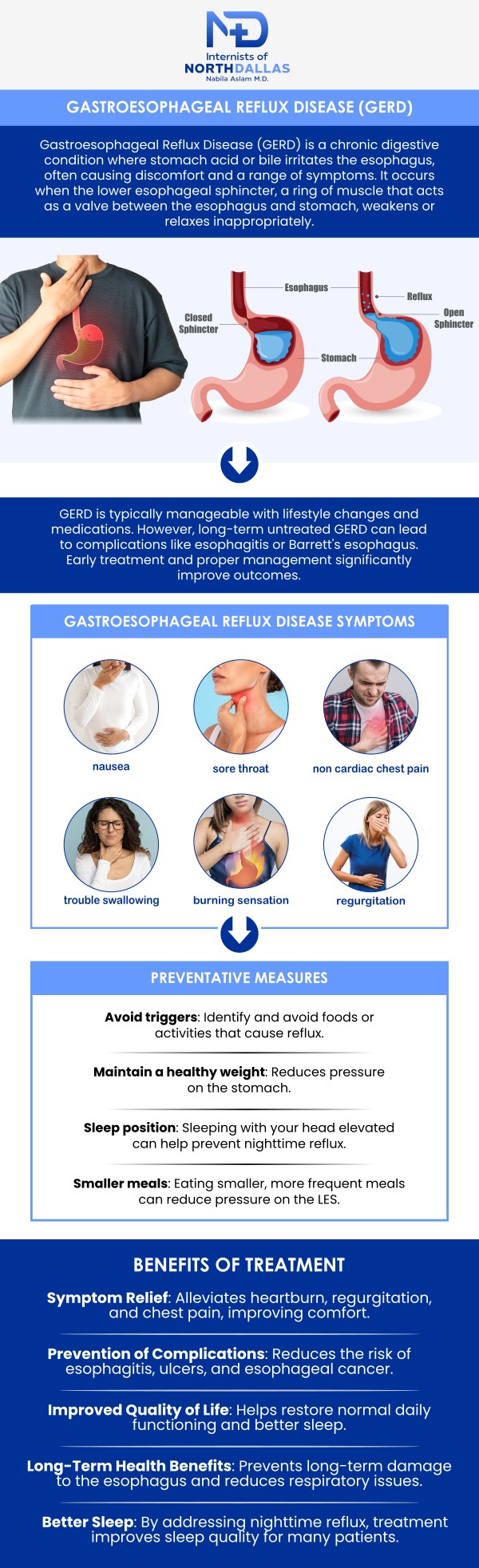
Table of Contents:
Where is GERD pain usually felt in the body?
Can GERD pain feel like burning or pressure in the chest?
Why does GERD pain sometimes get worse after meals or at night?
When should GERD pain be evaluated by a doctor?
How does Dr. Nabila Aslam, MD, at Internists of North Dallas in Irving, TX, help identify the cause of GERD pain?
GERD pain is most commonly felt in the middle of the chest, behind the breastbone. It often feels like heartburn and may begin in the lower chest and move upward toward the throat. Some people may also experience discomfort in the upper abdomen.
GERD occurs when stomach contents repeatedly flow backward into the esophagus. Because the esophagus passes through the chest, reflux-related irritation can cause discomfort in several different places, including:
• Behind the breastbone
• Middle or lower chest
• Upper abdomen
• Throat, particularly when reflux travels upward
Chest discomfort should not automatically be assumed to be GERD because heart-related conditions can cause similar symptoms. New, unexplained, severe, or concerning chest pain should be medically evaluated to rule out a heart-related cause.
Yes. GERD commonly causes a burning sensation in the chest, often called heartburn. This discomfort typically occurs behind the breastbone and results from stomach contents refluxing into and irritating the esophagus.
Instead of the usual burning feeling, some people characterize GERD-related chest pain as pressure, squeezing, tightness, or pain. GERD-related chest pain can sometimes resemble angina or other heart-related discomfort, making it difficult to distinguish based on symptoms alone.
For this reason, persistent or unexplained chest pressure should be evaluated rather than assumed to be acid reflux. Chest pain associated with physical activity or other concerning symptoms requires prompt medical attention because heart conditions need to be considered first.
GERD symptoms may worsen after eating because a fuller stomach can increase the likelihood that stomach contents will move backward into the esophagus. Larger meals or foods that trigger reflux in an individual may make heartburn, regurgitation, and related discomfort more noticeable.
Symptoms can also become worse at night because lying down removes some of the effect of gravity that helps keep stomach contents in the stomach. Eating shortly before lying down may therefore make nighttime reflux more likely.
People who experience nighttime GERD may benefit from discussing their eating habits and symptoms with a healthcare professional. At Internists of North Dallas, we can evaluate recurring or nighttime GERD symptoms and help identify factors that may be contributing to reflux. Based on each patient’s symptoms and health history, we can recommend personalized strategies to help manage discomfort and support better digestive health.
GERD symptoms should be evaluated when they are frequent, persistent, worsening, interfering with everyday life, or not improving with appropriate measures. Medical evaluation can help determine whether GERD or another condition is responsible for the symptoms.
Patients should seek medical attention for warning signs such as:
• New or unexplained chest pain
• Difficulty or pain with swallowing
• Persistent vomiting
• Unexplained weight loss
• Loss of appetite
• Throwing up blood or something that looks like coffee grounds
• Black, tarry, or bloody stools
Chest pain deserves particular attention because GERD and heart-related problems can sometimes feel similar. A person should not assume that new chest pain is caused by reflux until an appropriate medical evaluation has ruled out potentially serious causes.
Dr. Nabila Aslam, MD, helps identify the possible cause of GERD pain by carefully reviewing each patient’s symptoms, medical history, eating habits, medications, and factors that may trigger or worsen reflux. She may also evaluate the location, timing, and severity of discomfort and look for symptoms such as heartburn, regurgitation, difficulty swallowing, or upper abdominal discomfort that can help distinguish GERD from other conditions.
At Internists of North Dallas in Irving, TX, Dr. Nabila Aslam, MD, takes a personalized approach to evaluating persistent or recurring GERD pain. When appropriate, she may recommend additional testing or specialist evaluation to clarify the diagnosis, rule out other causes of chest or abdominal discomfort, and guide an individualized treatment plan.
For more information, contact us or schedule an appointment online. We are conveniently located at 4500 N MacArthur Blvd #130, Irving, TX 75038. We serve patients from Irving TX, Coppell TX, Euless TX, Las Colinas TX, Farmers Branch TX, Valley Ranch TX, and surrounding areas.

Check Out Our 5 Star Reviews


Additional Services You May Need
Additional Services You May Need
▸ Primary Care
▸ Internal Medicine
▸ Geriatrics
▸ Diabetes
▸ Physical Exam
▸ Vaccinations
▸ Chest Pain
▸ Chronic Care Management
▸ Hypertension
▸ Common Cold
▸ Arthritis
▸ Allergies
▸ Acute Care
▸ Women’s Health
▸ Wellness
▸ Annual Physical
▸ Sickness Visits
▸ Anxiety and Depression
▸ Congestive Heart Failure
▸ COPD
▸ Gerd
▸ Hypothyroidism
▸ Alzheimer’s disease
▸ Dementia
▸ Acid Reflux
 4500 N MacArthur Blvd #130, Irving, TX 75038
 Call Now
 Monday - Friday: 8:00 AM - 5:00 PM


 Send Text
 How May I Help You?